← The Great Transformation

False Dawn

Download PDF · 35 slides

False Dawn. The delusions of global capitalism
1
“The origins of the catastrophe lay in the Utopian endeavor of economic liberalism to set up a self-regulating market system.” – Karl Polanyi
2
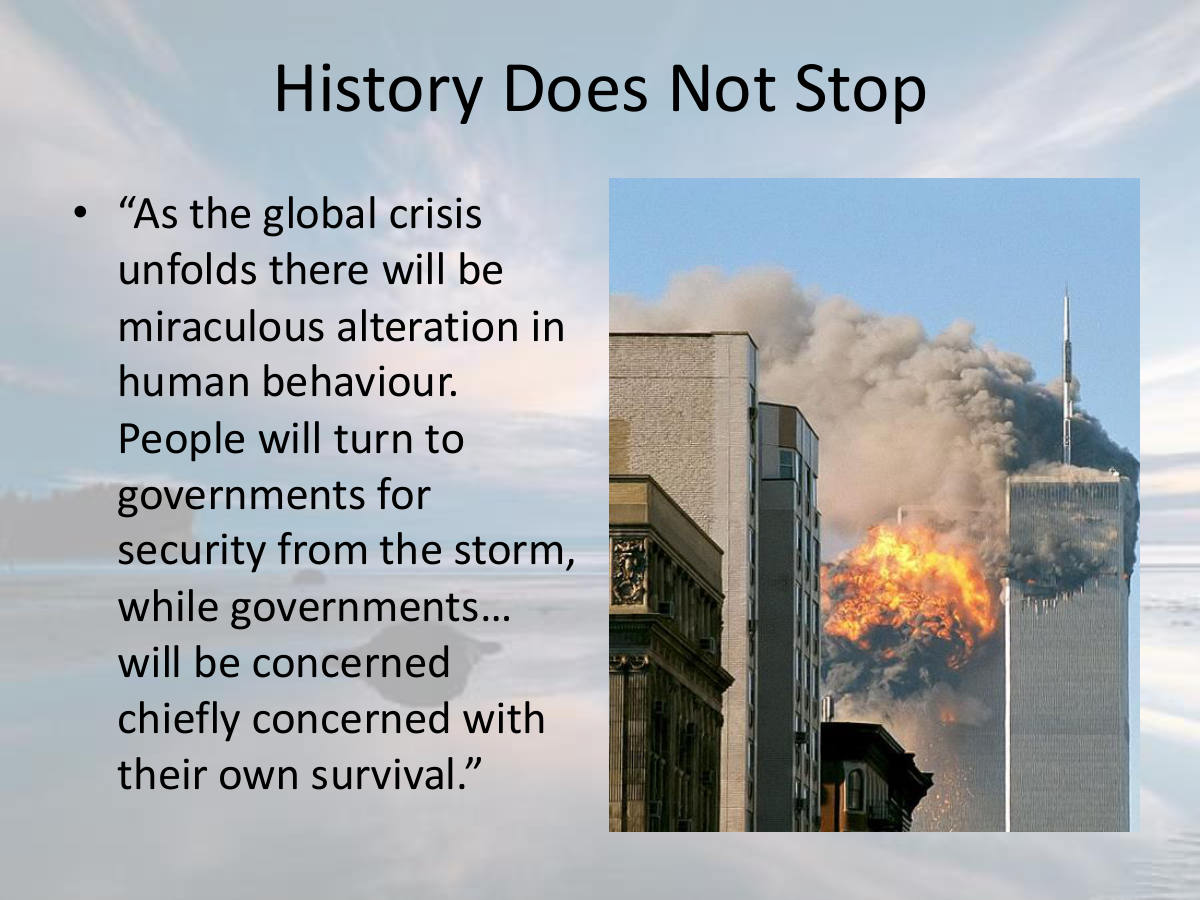
History Does Not Stop. “As the global crisis unfolds there will be miraculous alteration in human behaviour. People will turn to governments for security from the storm, while governments… will be concerned chiefly concerned with their own survival.”
3
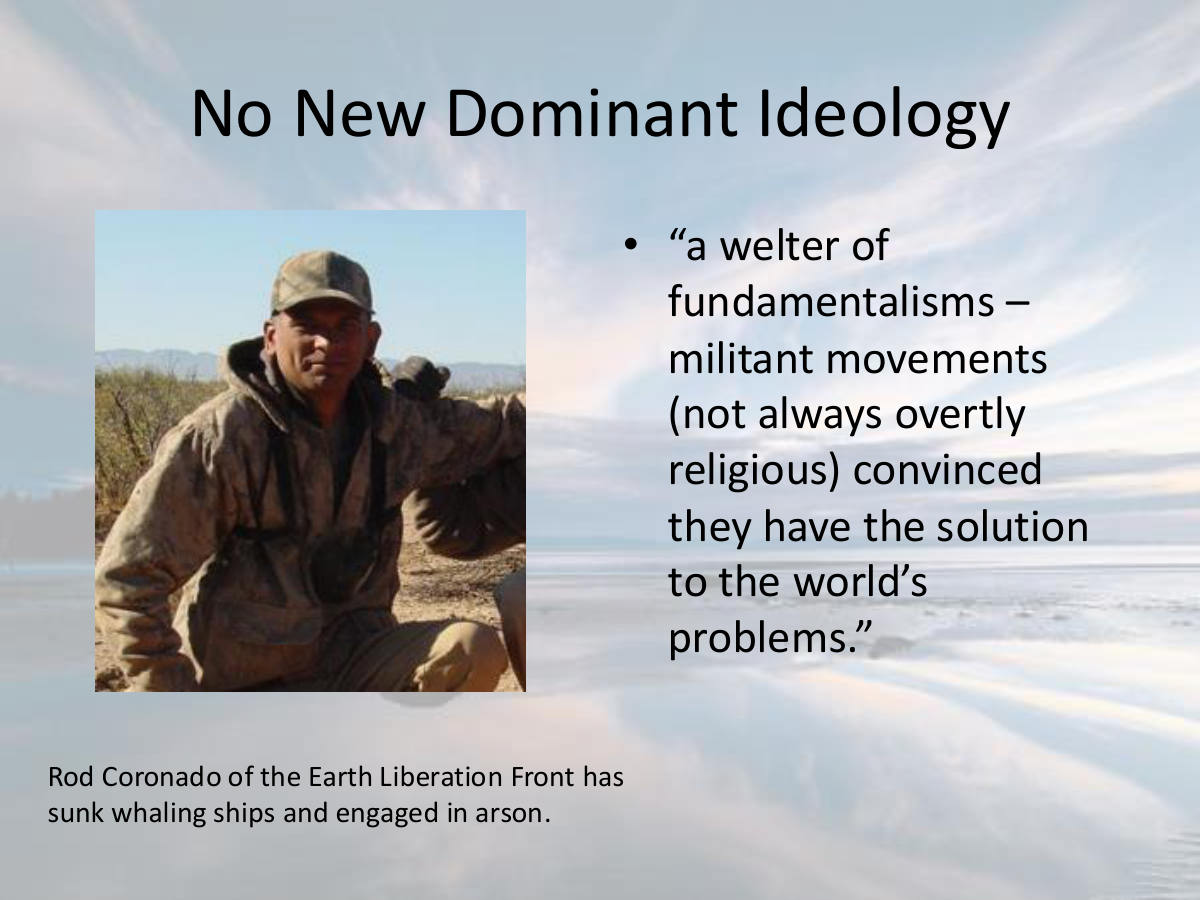
No New Dominant Ideology. “a welter of fundamentalisms – militant movements (not always overtly religious) convinced they have the solution to the world’s problems.” Rod Coronado of the Earth Liberation Front has sunk whaling ships and engaged in arson.
4
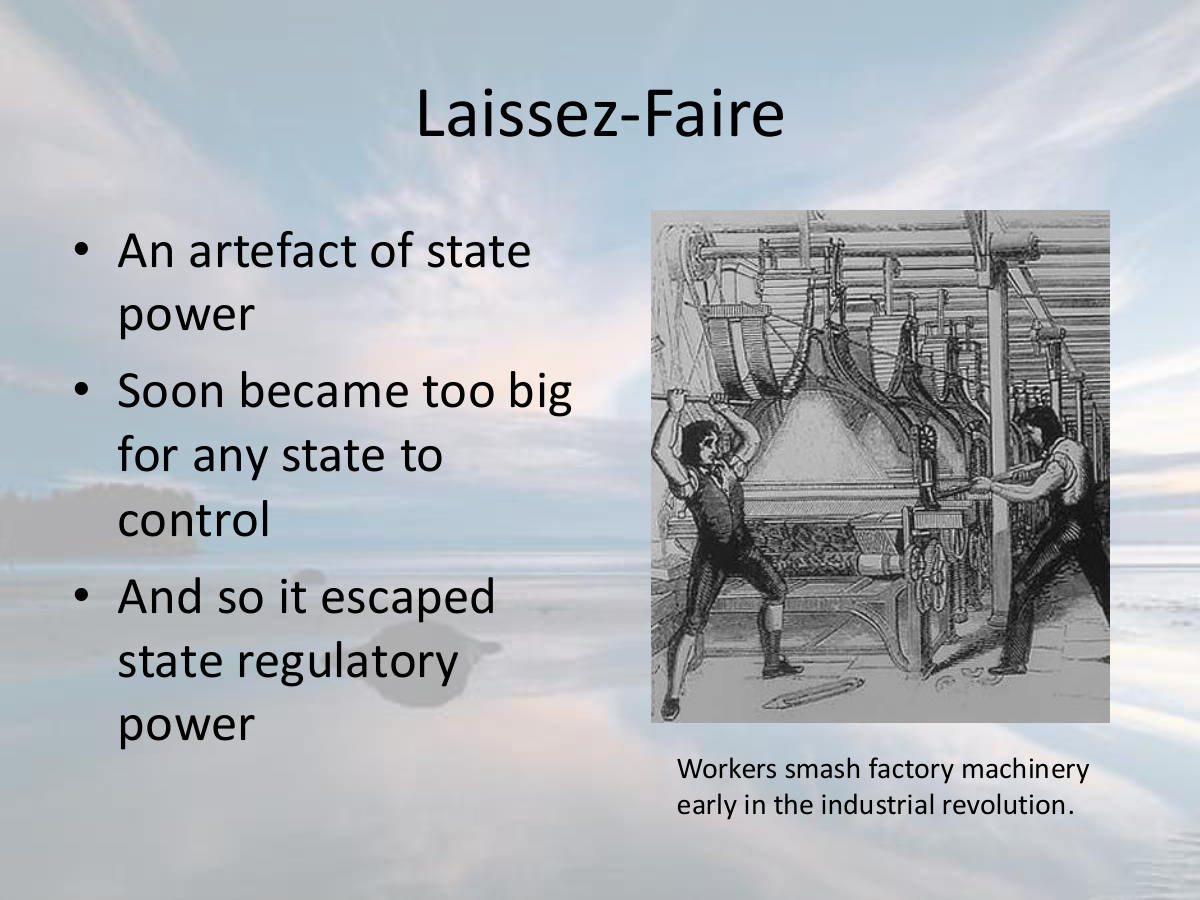
Laissez-Faire. An artefact of state power. Soon became too big for any state to control. And so it escaped state regulatory power. Workers smash factory machinery early in the industrial revolution.
5
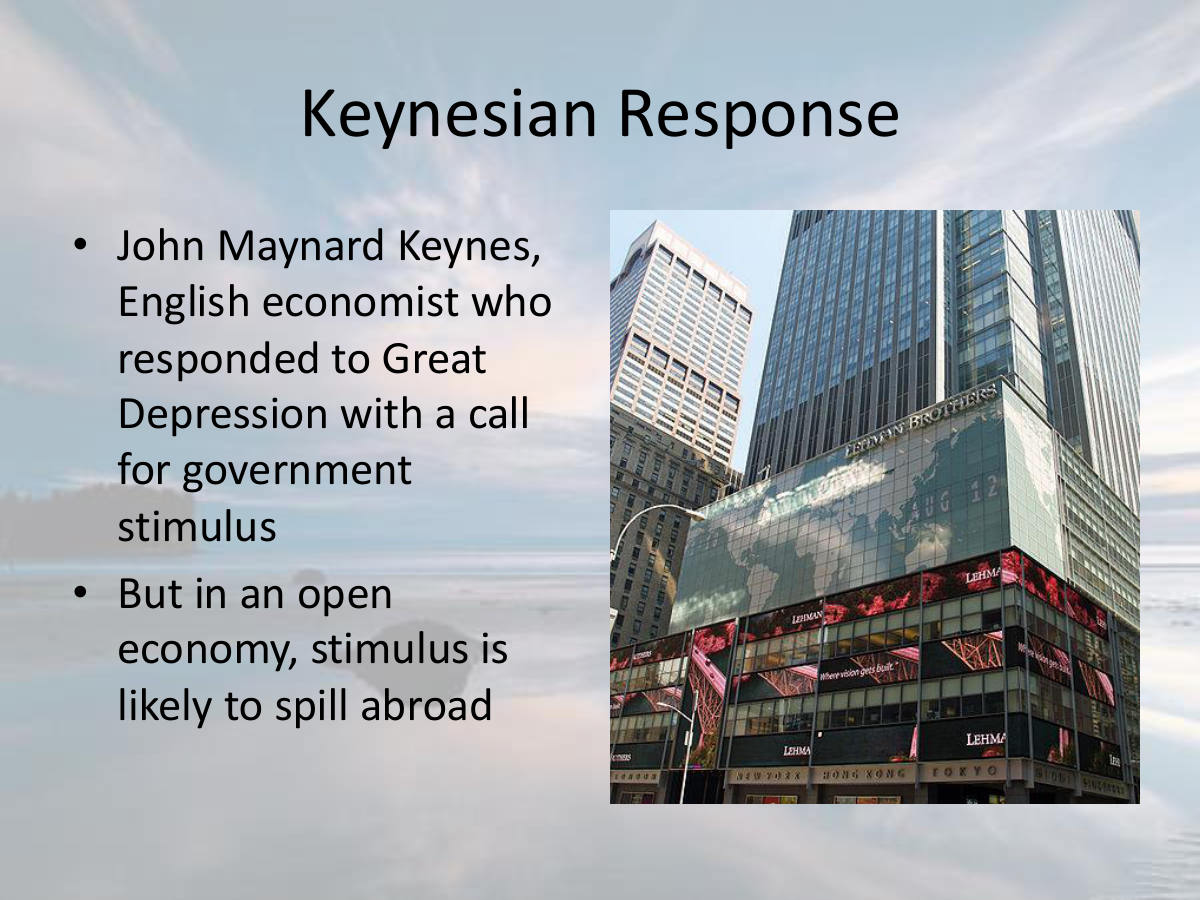
Keynesian Response. John Maynard Keynes, English economist who responded to Great Depression with a call for government stimulus. But in an open economy, stimulus is likely to spill abroad
6
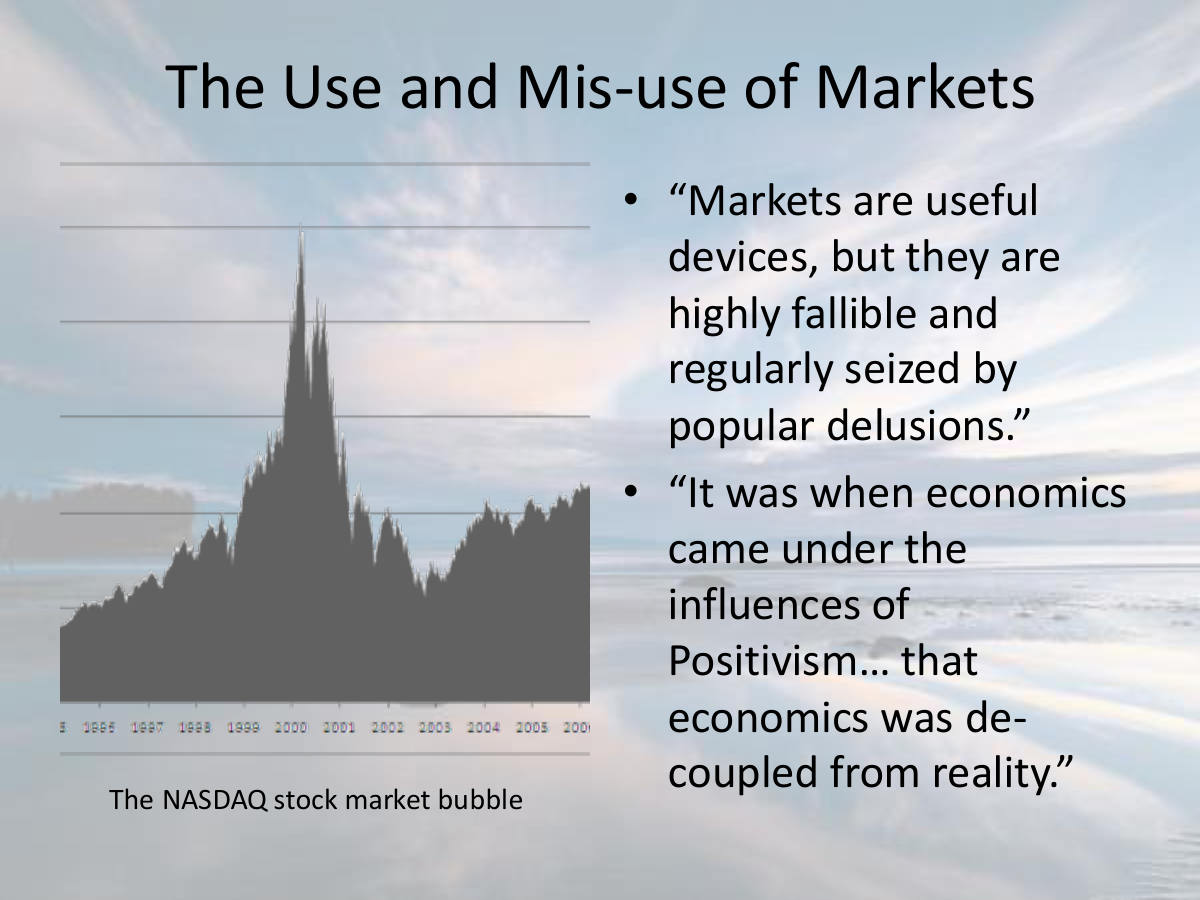
The Use and Mis-use of Markets. “Markets are useful devices, but they are highly fallible and regularly seized by popular delusions.” “It was when economics came under the influences of Positivism… that economics was de-coupled from reality.” The NASDAQ stock market bubble
7
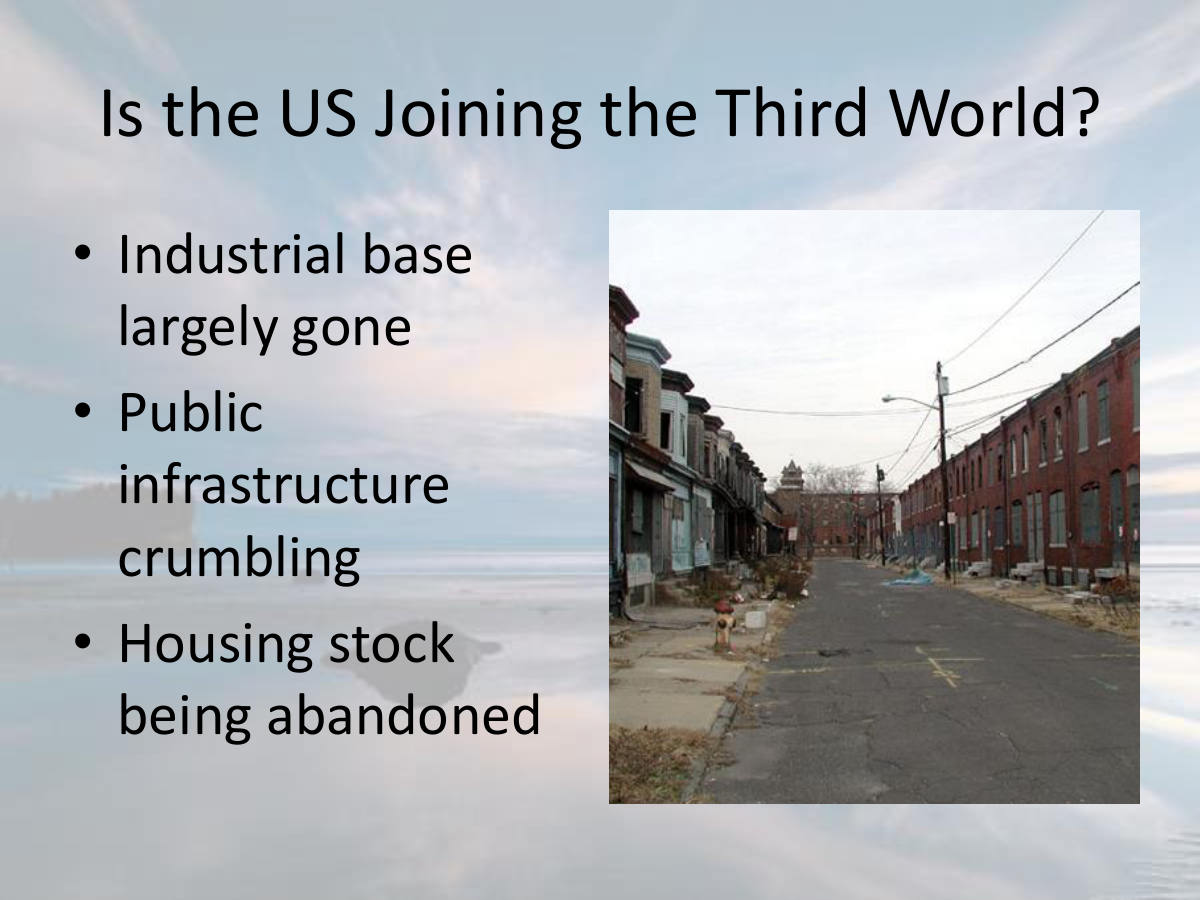
Is the US Joining the Third World? Industrial base largely gone. Public infrastructure crumbling. Housing stock being abandoned
8
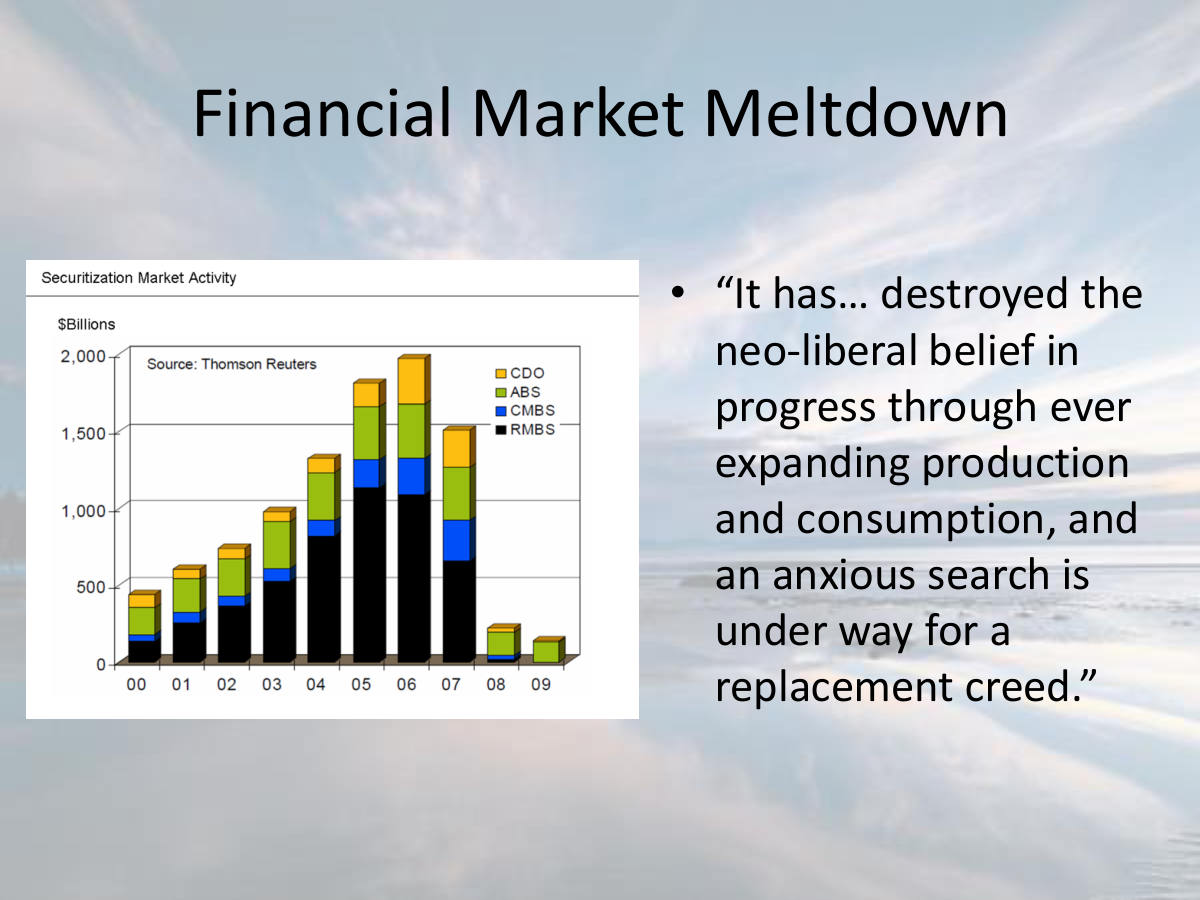
Financial Market Meltdown. “It has… destroyed the neo-liberal belief in progress through ever expanding production and consumption, and an anxious search is under way for a replacement creed.”
9
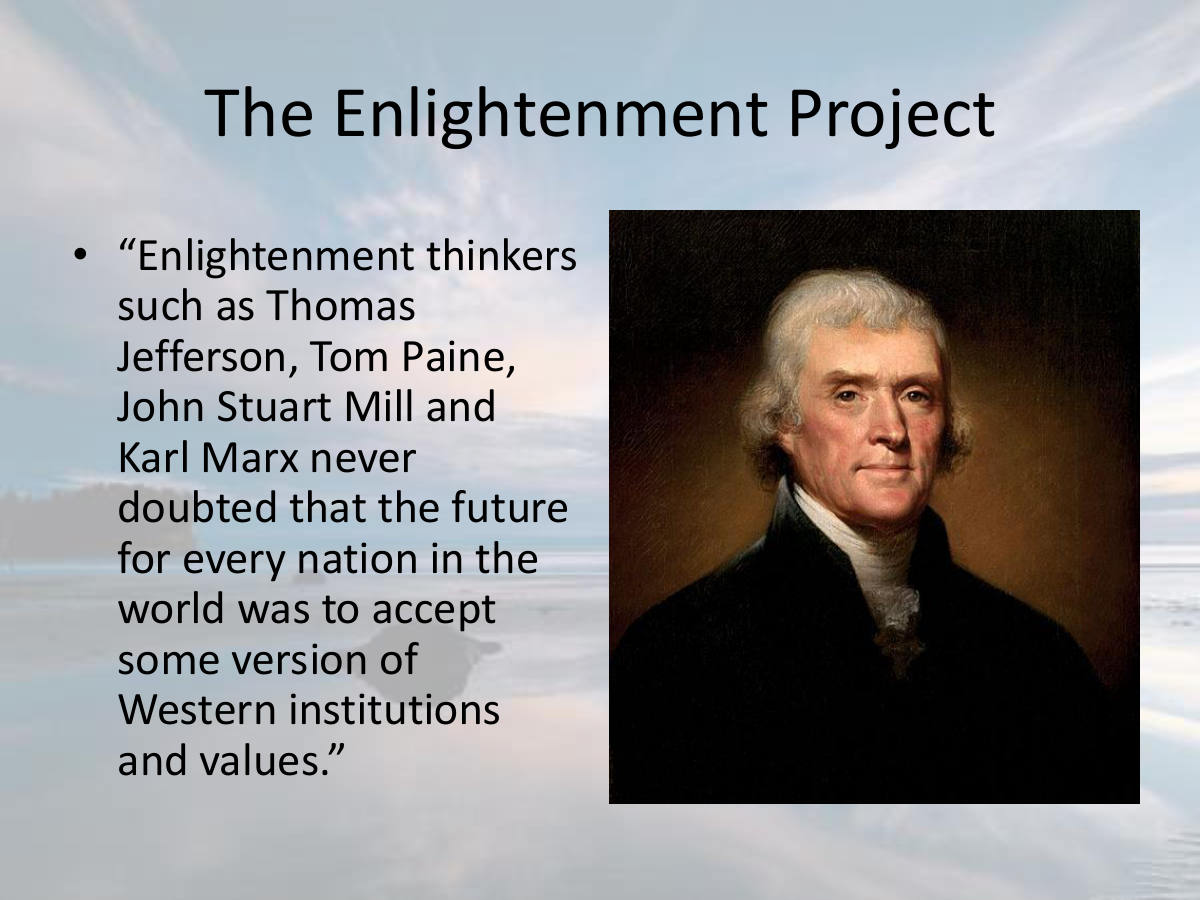
The Enlightenment Project. “Enlightenment thinkers such as Thomas Jefferson, Tom Paine, John Stuart Mill and Karl Marx never doubted that the future for every nation in the world was to accept some version of Western institutions and values.”
10
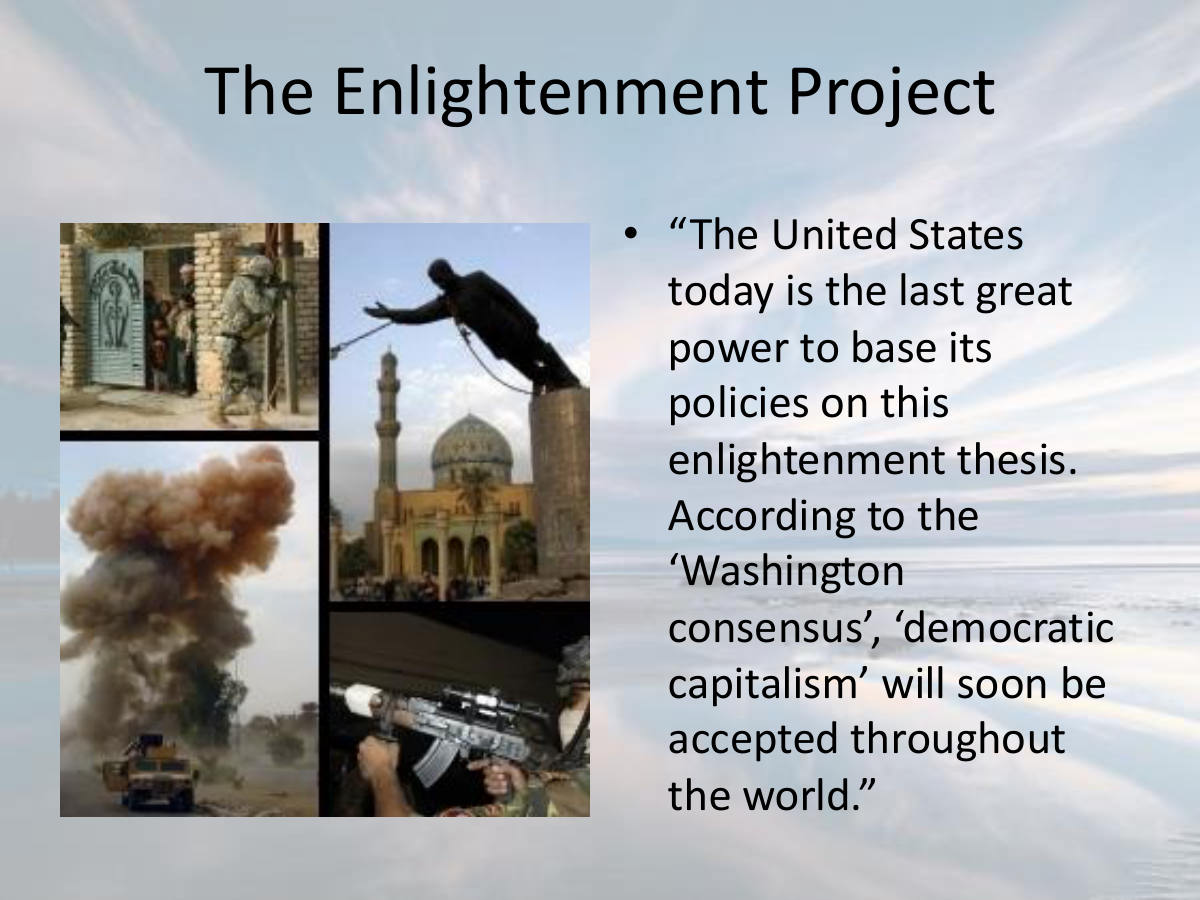
The Enlightenment Project. “The United States today is the last great power to base its policies on this enlightenment thesis. According to the ‘Washington consensus’, ‘democratic capitalism’ will soon be accepted throughout the world.”
11
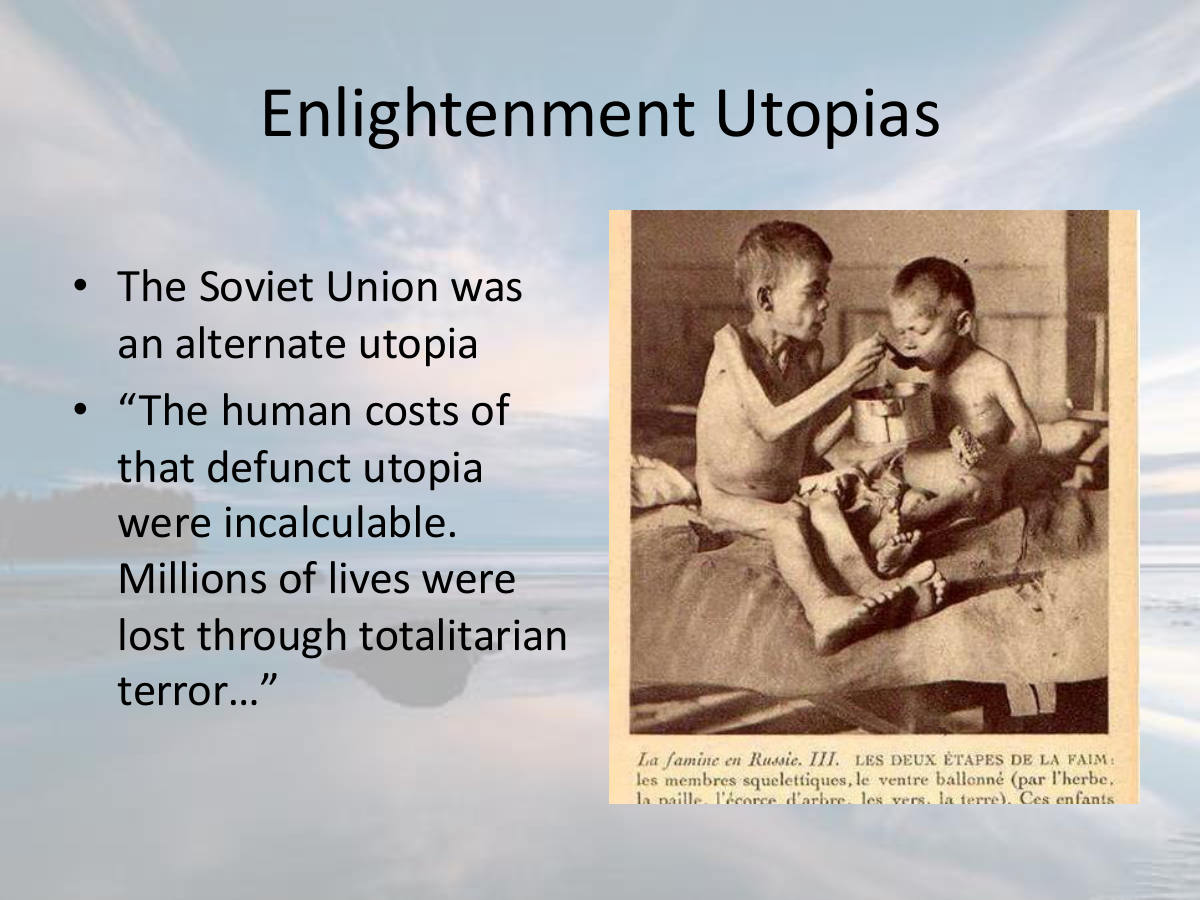
Enlightenment Utopias. The Soviet Union was an alternate utopia. “The human costs of that defunct utopia were incalculable. Millions of lives were lost through totalitarian terror…”
12
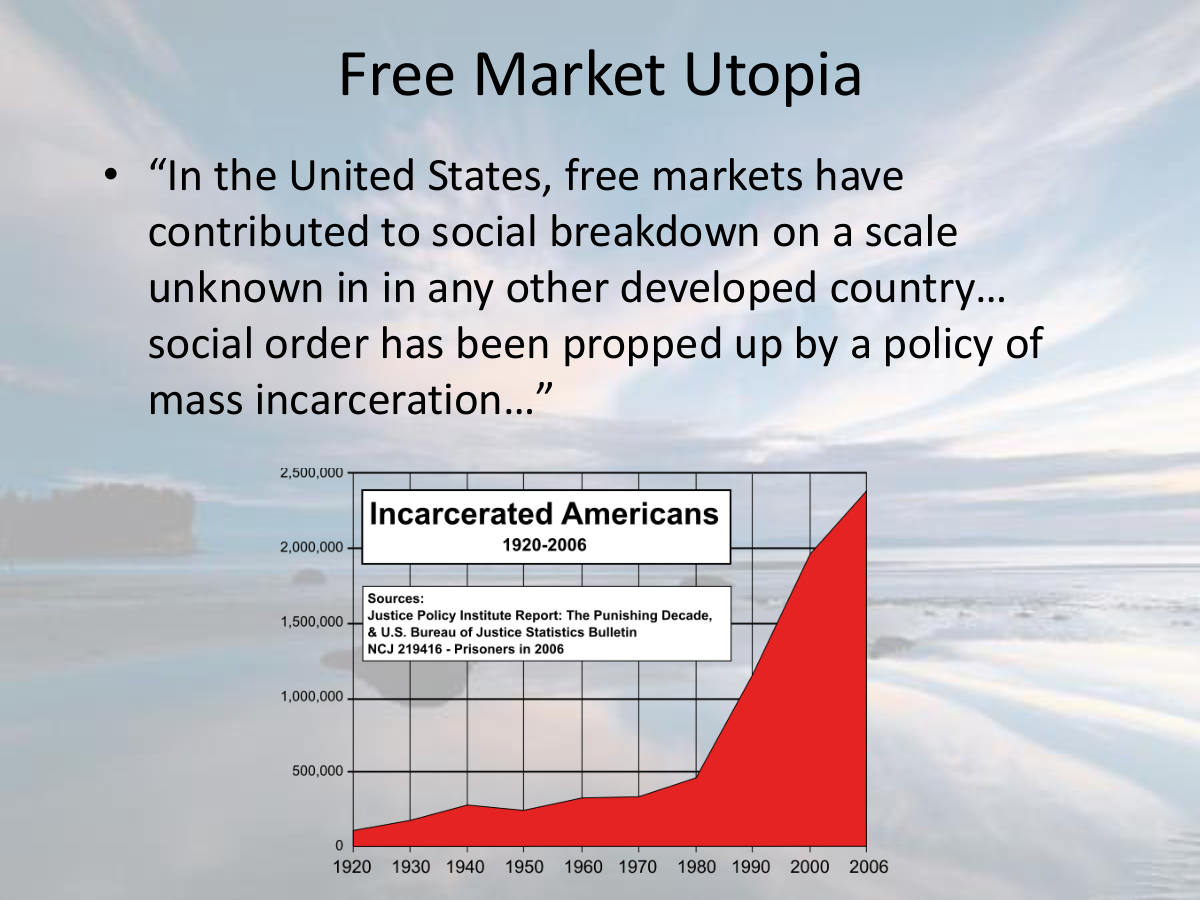
Free Market Utopia. “In the United States, free markets have contributed to social breakdown on a scale unknown in in any other developed country… social order has been propped up by a policy of mass incarceration…”
13
The Free Market in Britain. “They hang the man, and flog the woman, That steals the goose from off the common; But let the greater villain loose, That steals the common from the goose.” Enclosures. Repeal of the Corn Laws. Poor Law Reform. Individual solely responsible for their own welfare: no shared responsibility
14
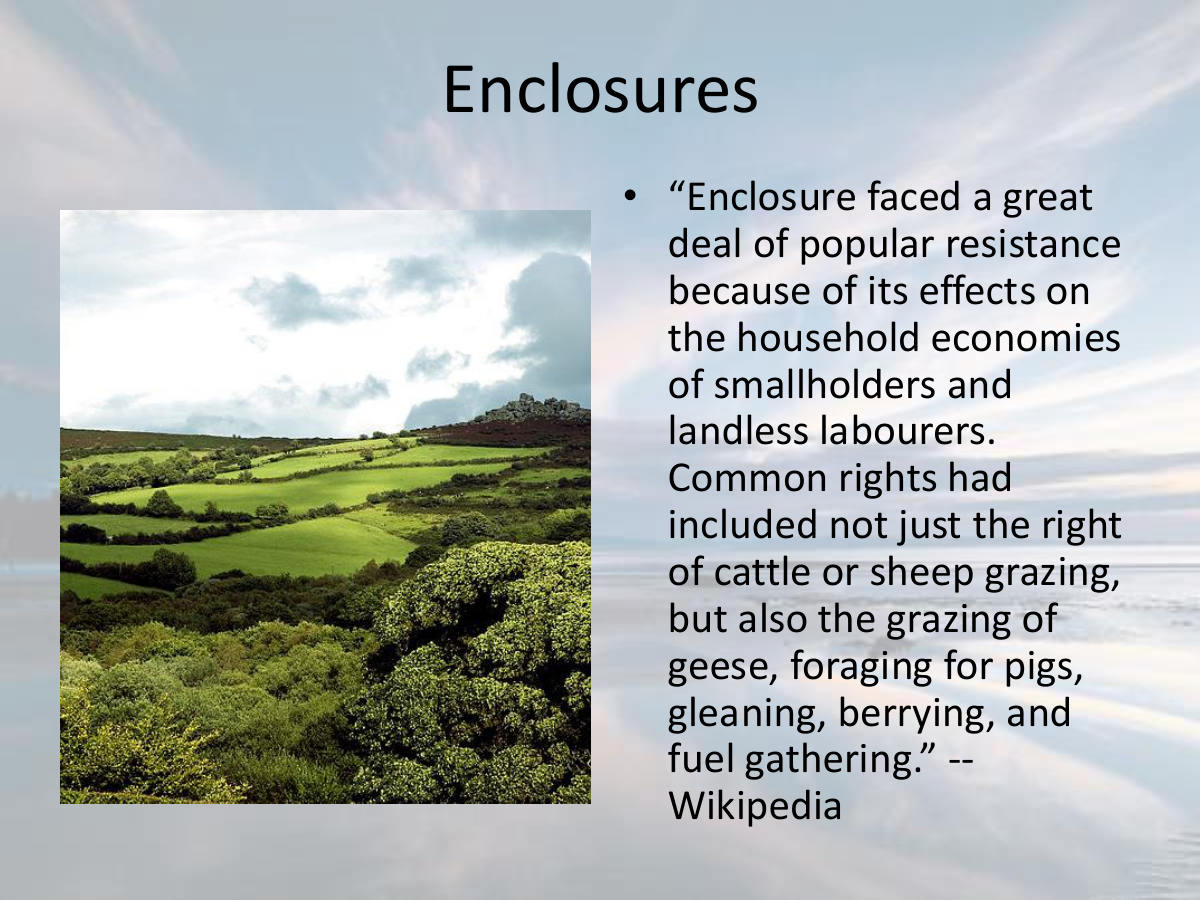
Enclosures. “Enclosure faced a great deal of popular resistance because of its effects on the household economies of smallholders and landless labourers. Common rights had included not just the right of cattle or sheep grazing, but also the grazing of geese, foraging for pigs, gleaning, berrying, and fuel gathering.” -- Wikipedia
15
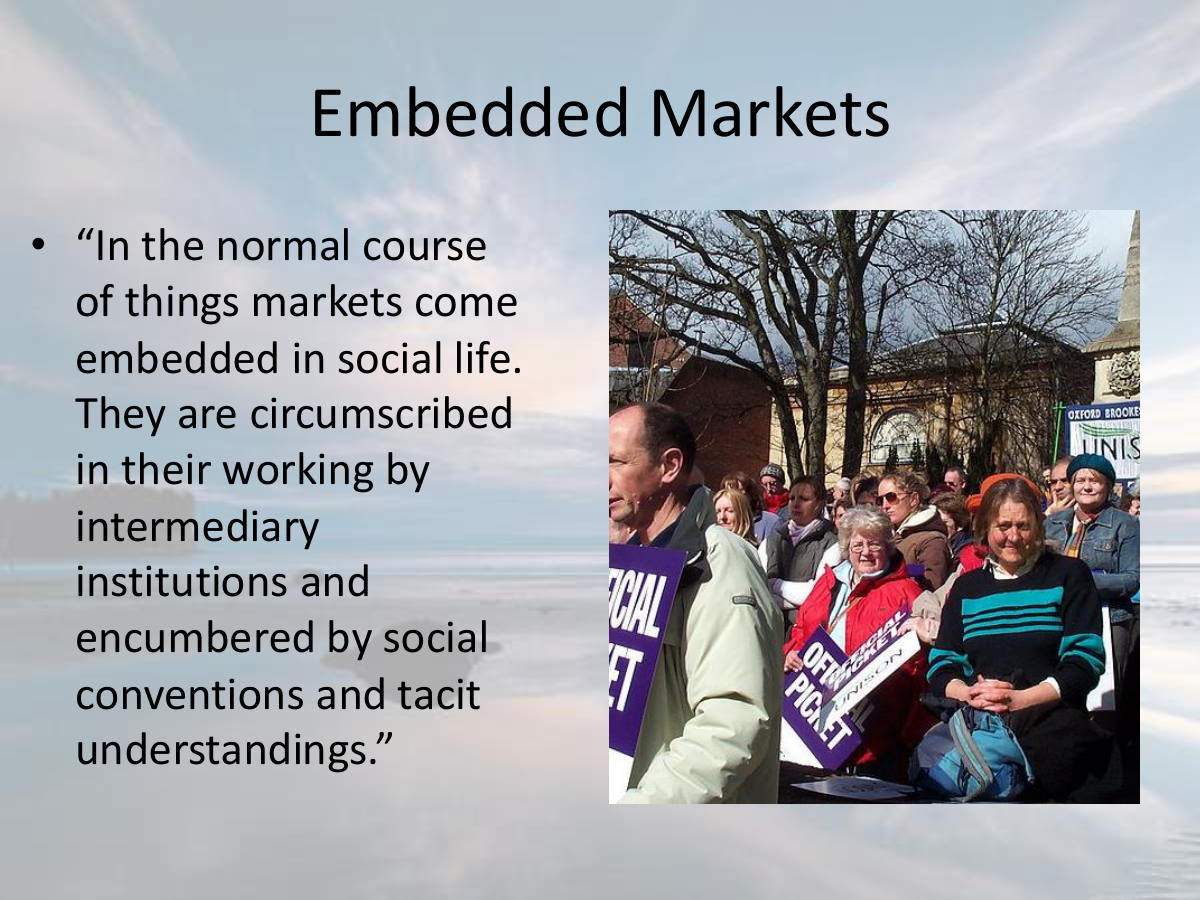
Embedded Markets. “In the normal course of things markets come embedded in social life. They are circumscribed in their working by intermediary institutions and encumbered by social conventions and tacit understandings.”
16
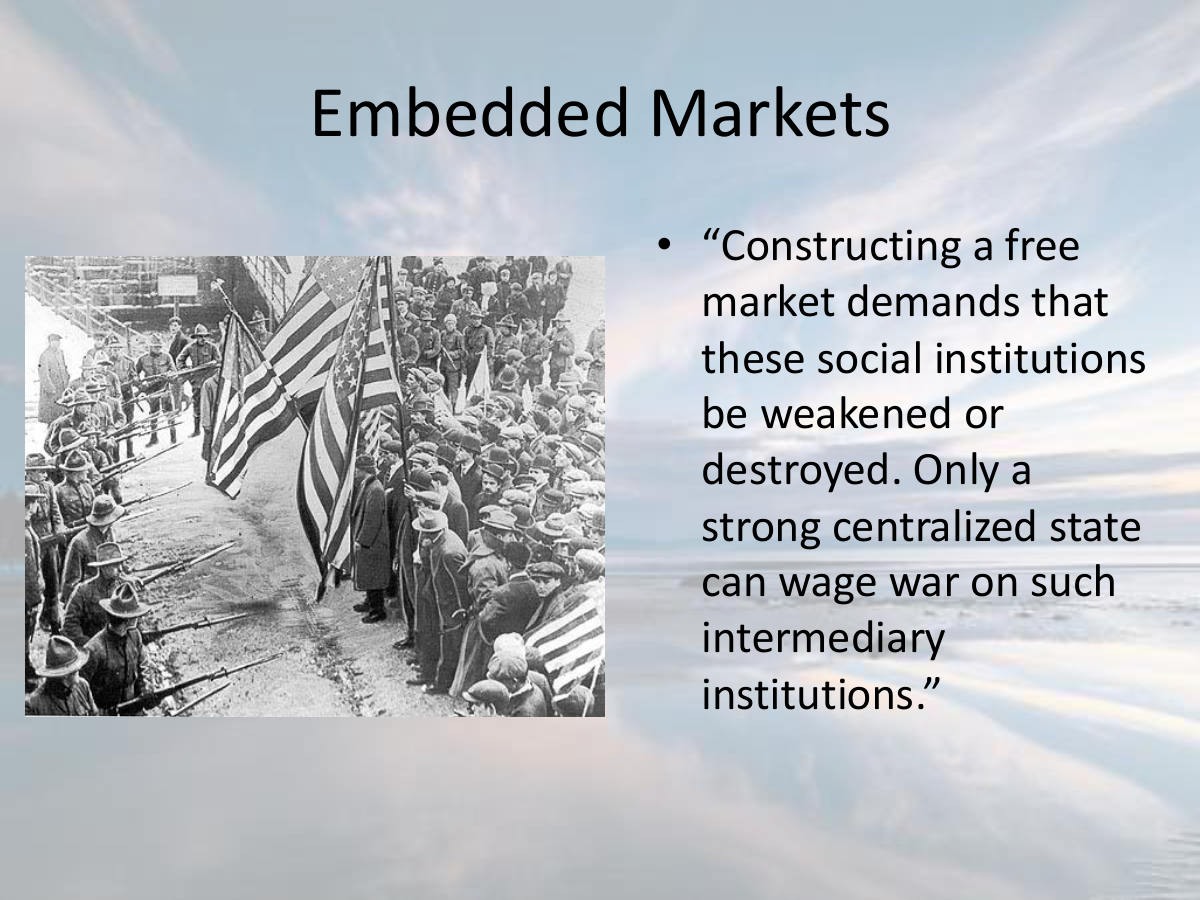
Embedded Markets. “Constructing a free market demands that these social institutions be weakened or destroyed. Only a strong centralized state can wage war on such intermediary institutions.”
17
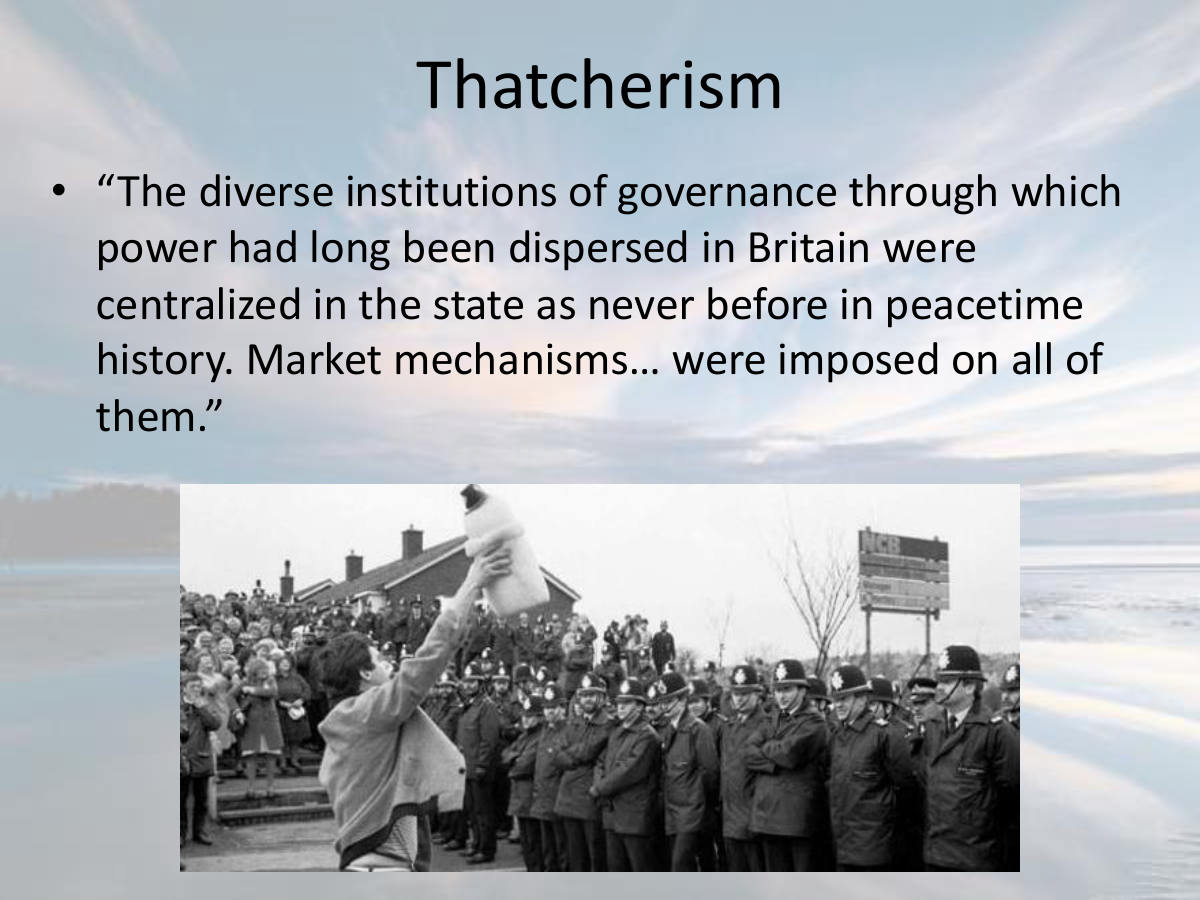
Thatcherism. “The diverse institutions of governance through which power had long been dispersed in Britain were centralized in the state as never before in peacetime history. Market mechanisms… were imposed on all of them.”
18
Crime in the UK. “Britain's violent crime record is worse than any other country in the European union, it has been revealed. Official crime figures show the UK also has a worse rate for all types of violence than the U.S. and even South Africa - widely considered one of the world's most dangerous countries.” – The Daily Mail
19
New Zealand. “The result [of neoliberal policy] has been the emergence in New Zealand of of a… economically marginalized, socially excluded underclass of welfare dependents.” “the restructuring of New Zealand’s economy which opened it to unregulated capital flows conferred on transnational capital an effective veto power over public policy.”
20
Mexico. “It did not occur to [American elites} that economic modernization for Mexico could mean anything other than assimilation into American business culture.”
21
Mexican Bailout. The United States arranged currency swaps and loan guarantees with a $20 billion total value. The IMF promised an 18 month Stand-by Credit Agreement of around US $17.7 billion. TheBank for International Settlements offered a $10 billion line of credit. The Bank of Canada offered short term swaps with a US dollar value of around one billion. “The Mexican "bailout" attracted criticism in Congress and the press for the central role of the former Co-Chairman of Goldman Sachs, U.S. Treasury Secretary Robert Rubin. Rubin used a Treasury Department account under his personal control to distribute $20 billion to bail out Mexican bonds, of which Goldman was a key holder.” -- Wikipedia
22
Mexican Immigration. NAFTA was supposed to act as a prophylactic against continued illegal immigration from Mexico. But illegal Mexican immigration is now 62% of the US total, and increased 42% between 2000 (well after NAFTA) and 2009.
23
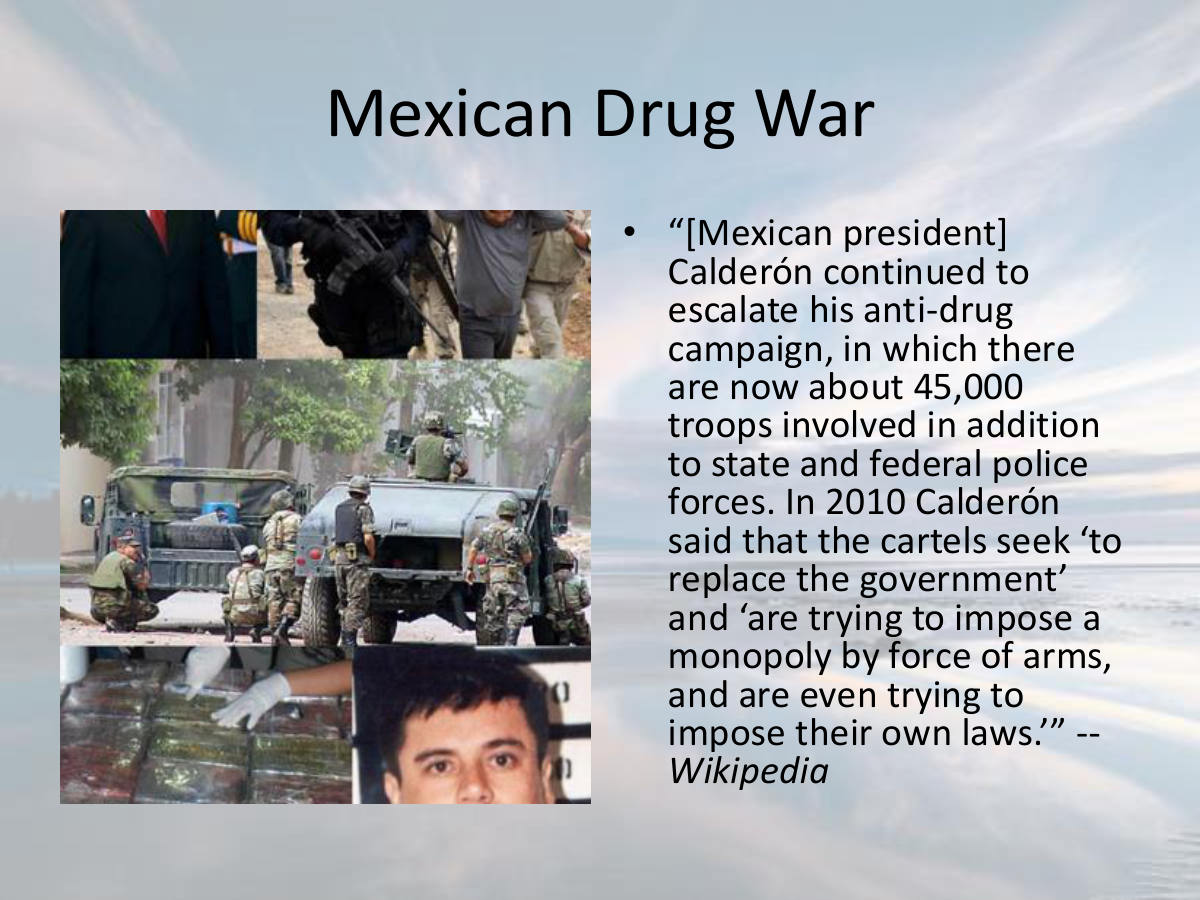
Mexican Drug War. “[Mexican president] Calderón continued to escalate his anti-drug campaign, in which there are now about 45,000 troops involved in addition to state and federal police forces. In 2010 Calderón said that the cartels seek ‘to replace the government’ and ‘are trying to impose a monopoly by force of arms, and are even trying to impose their own laws.’” -- Wikipedia
24
Globalization. “Capitalism, while economically stable, and even gaining in stability, creates, by rationalizing the human mind, a mentality and a style of life incompatible with its own fundamental conditions, motives and social institutions.” – Joseph Schumpeter
25
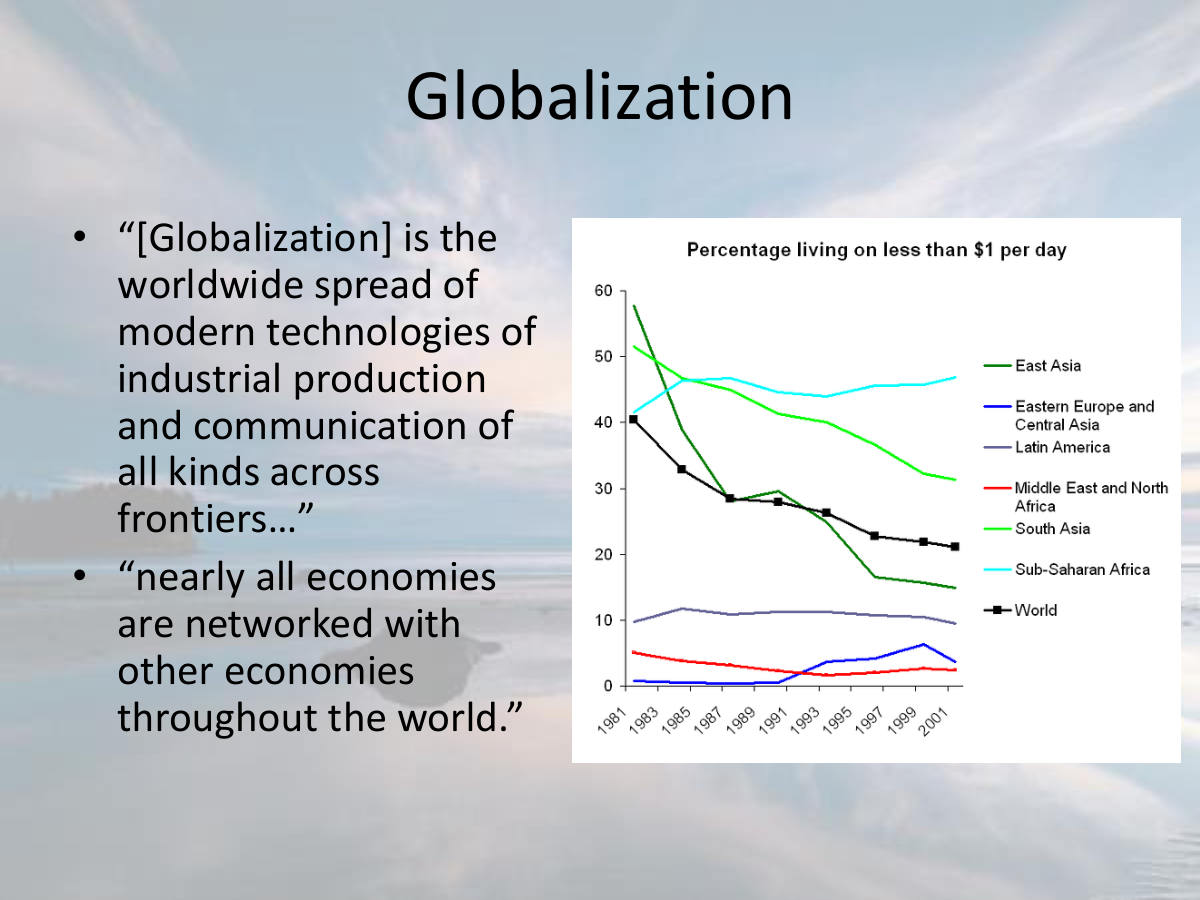
Globalization. “[Globalization] is the worldwide spread of modern technologies of industrial production and communication of all kinds across frontiers…” “nearly all economies are networked with other economies throughout the world.”
26
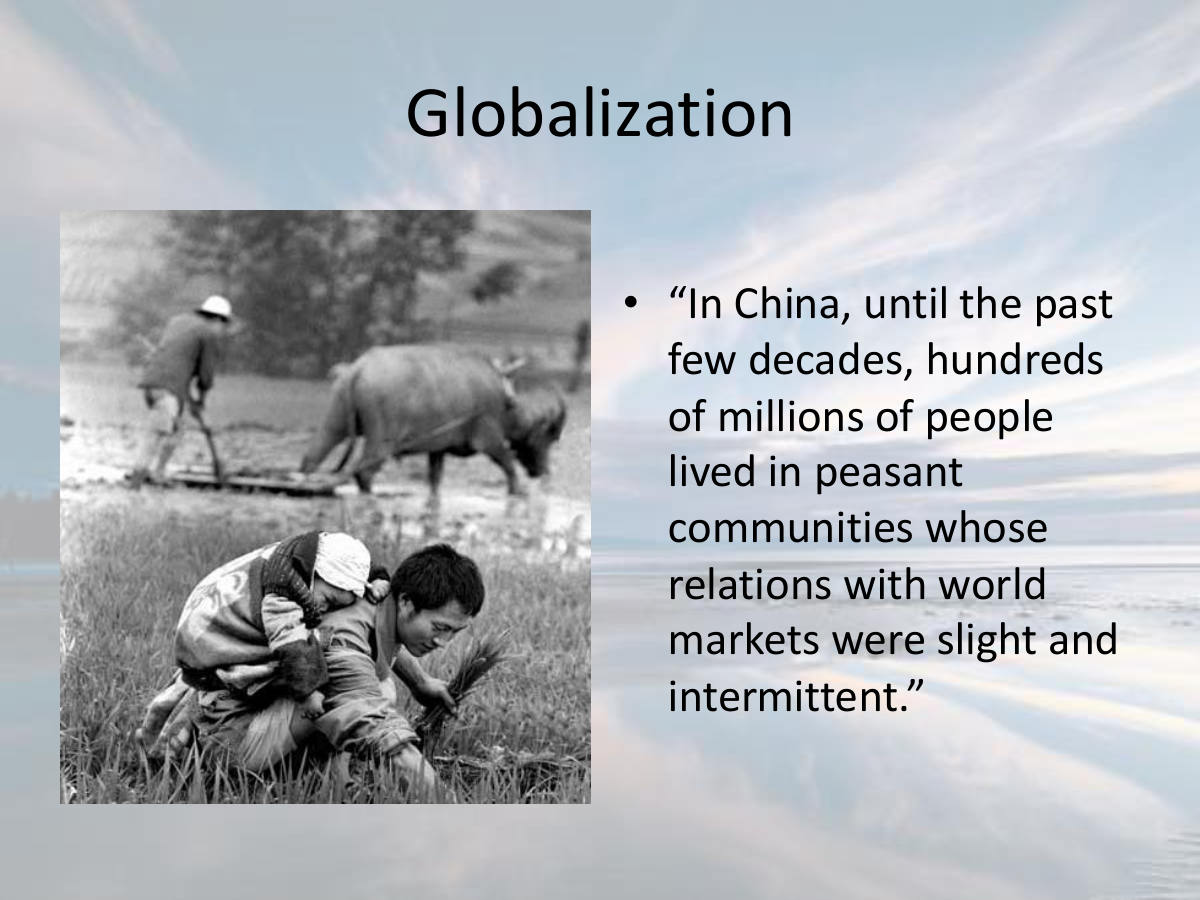
Globalization. “In China, until the past few decades, hundreds of millions of people lived in peasant communities whose relations with world markets were slight and intermittent.”
27
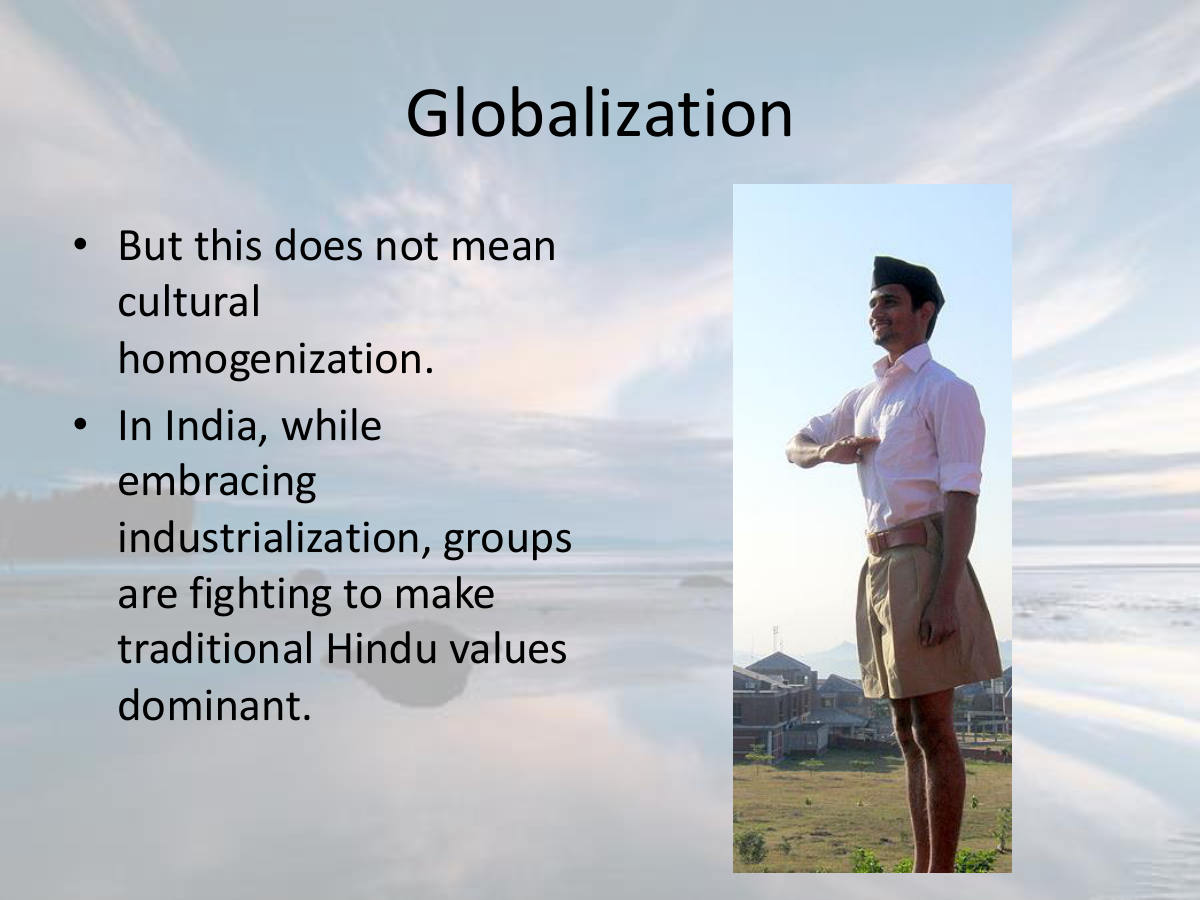
Globalization. But this does not mean cultural homogenization. In India, while embracing industrialization, groups are fighting to make traditional Hindu values dominant.
28
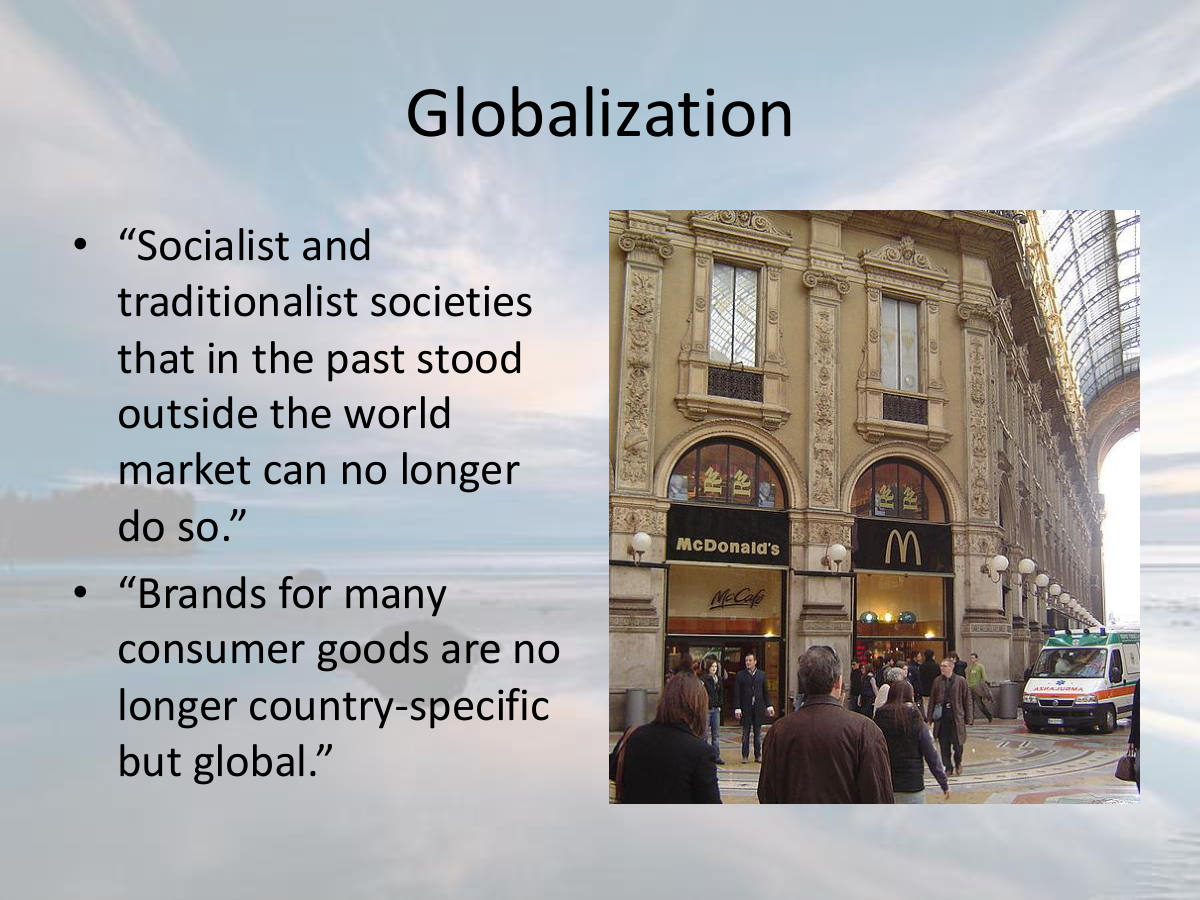
Globalization. “Socialist and traditionalist societies that in the past stood outside the world market can no longer do so.” “Brands for many consumer goods are no longer country-specific but global.”
29
Globalization. “Globalization is often equated with a trend towards homogeneity. That, again, is just what globalization is not. Global markets in which capital and production moves freely across frontiers work precisely because of the differences between localities, nations and regions.”
30
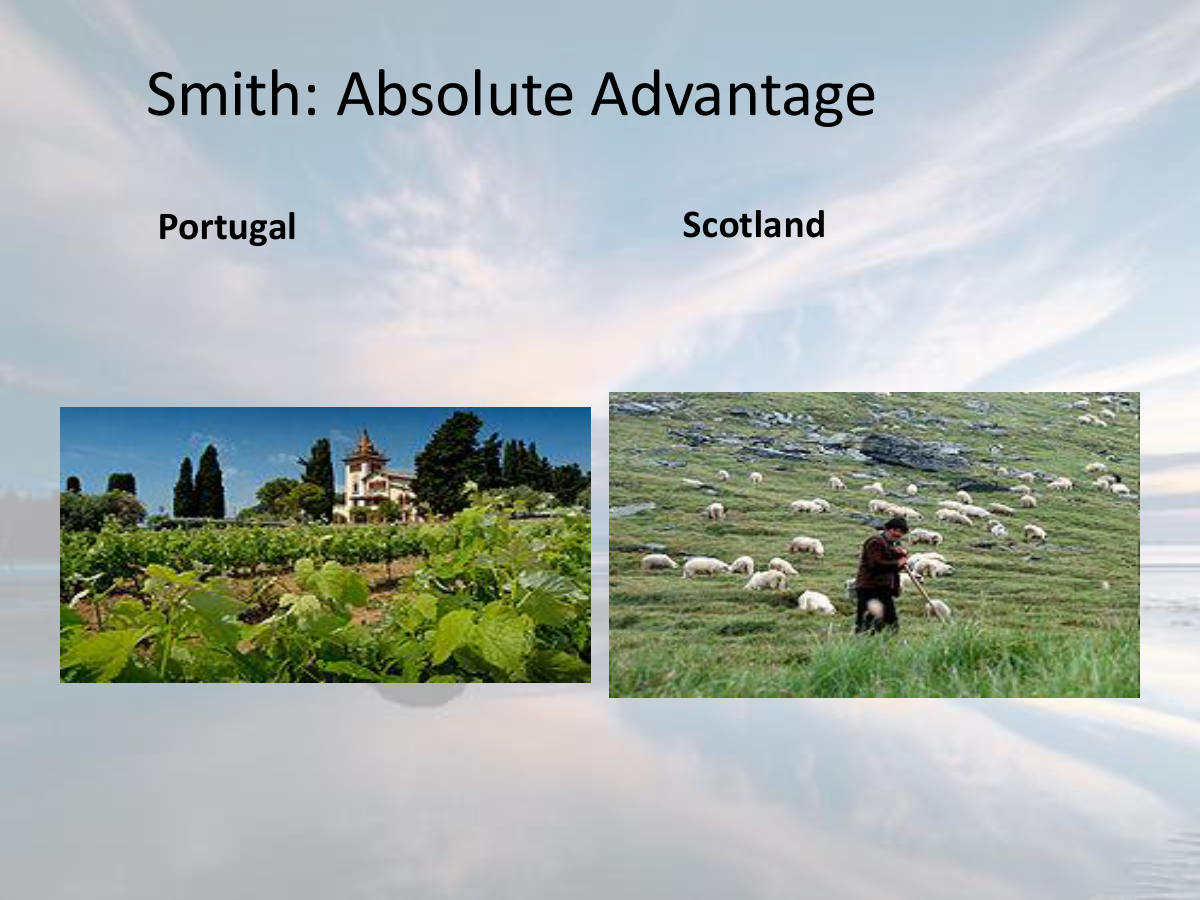
Smith: Absolute Advantage. Portugal Scotland
31
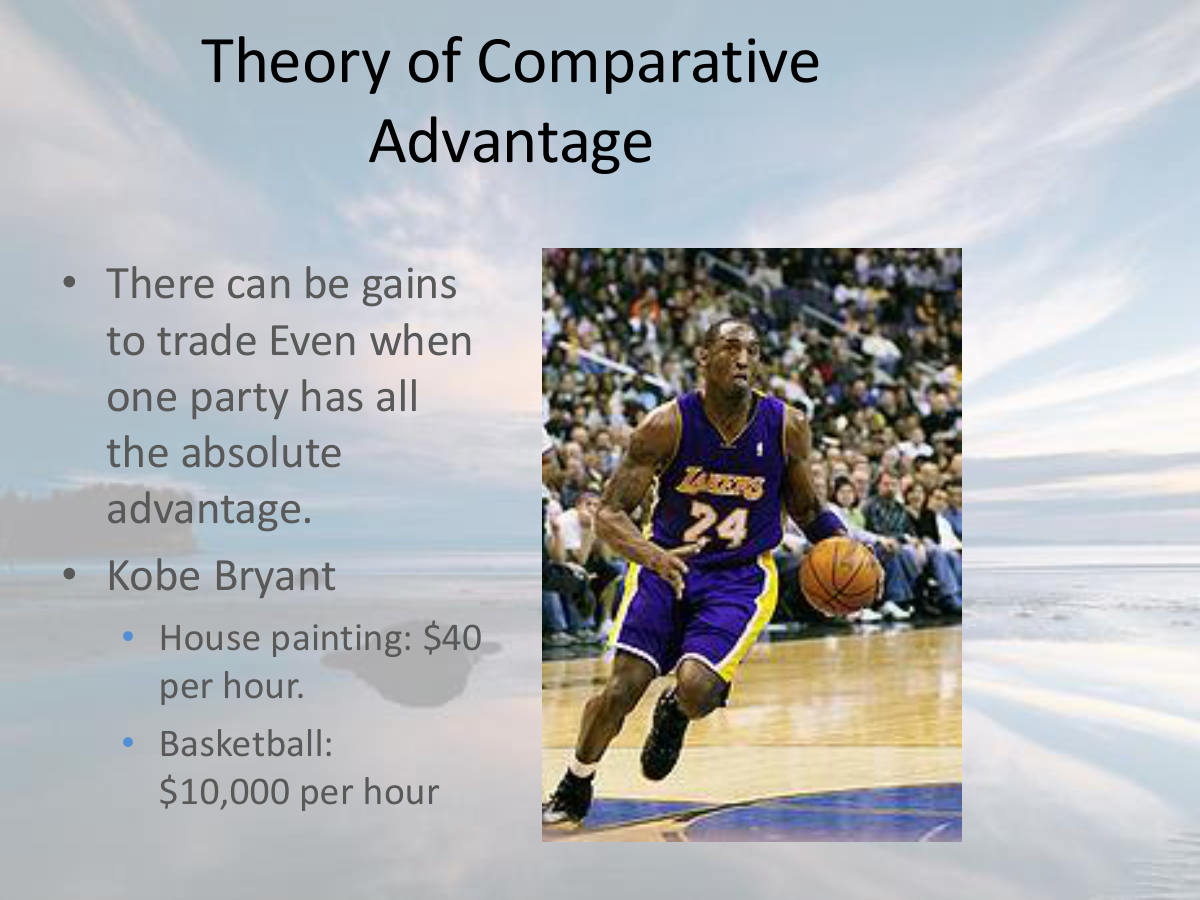
Theory of Comparative Advantage. There can be gains to trade Even when one party has all the absolute advantage. Kobe Bryant. House painting: $40 per hour. Basketball: $10,000 per hour
32
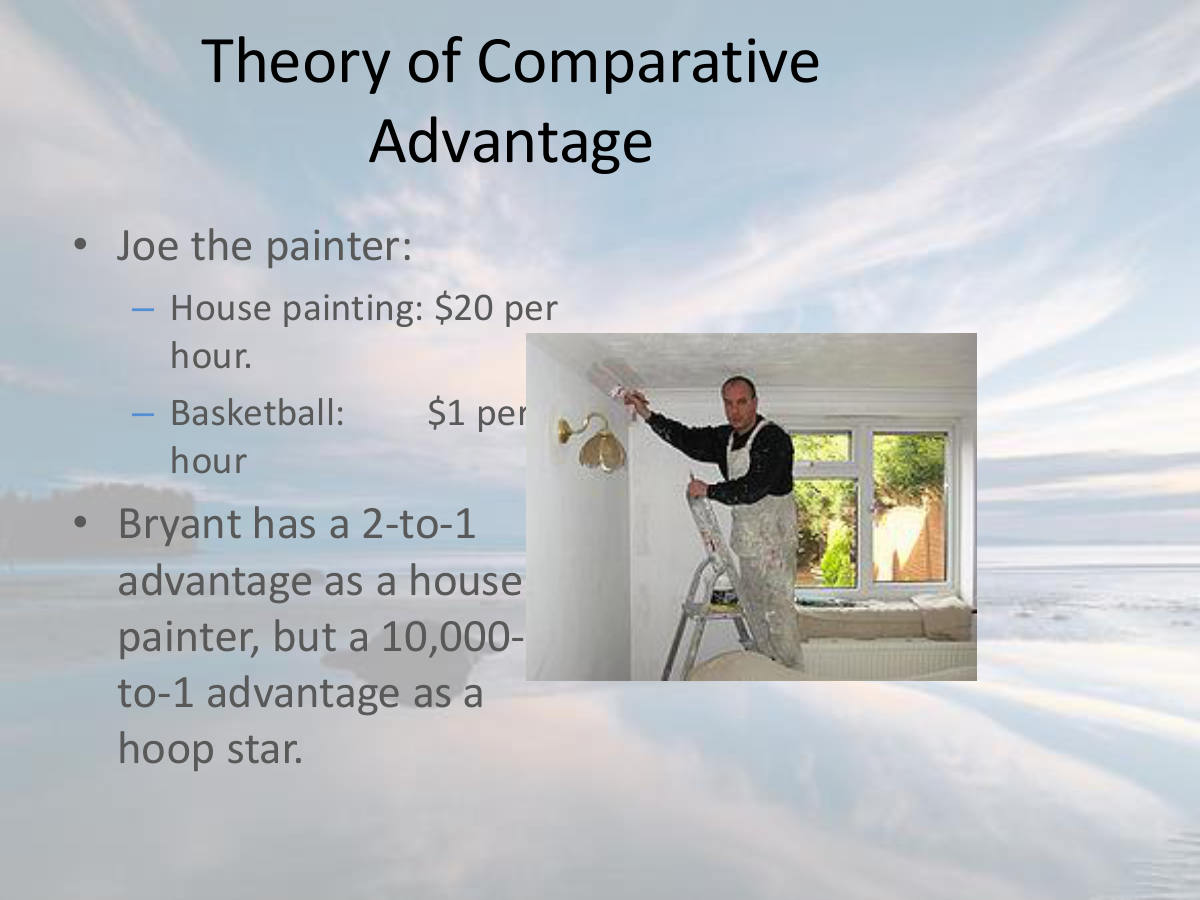
Theory of Comparative Advantage. Joe the painter: House painting: $20 per hour. Basketball: $1 per hour. Bryant has a 2-to-1 advantage as a house painter, but a 10,000-to-1 advantage as a hoop star.
33
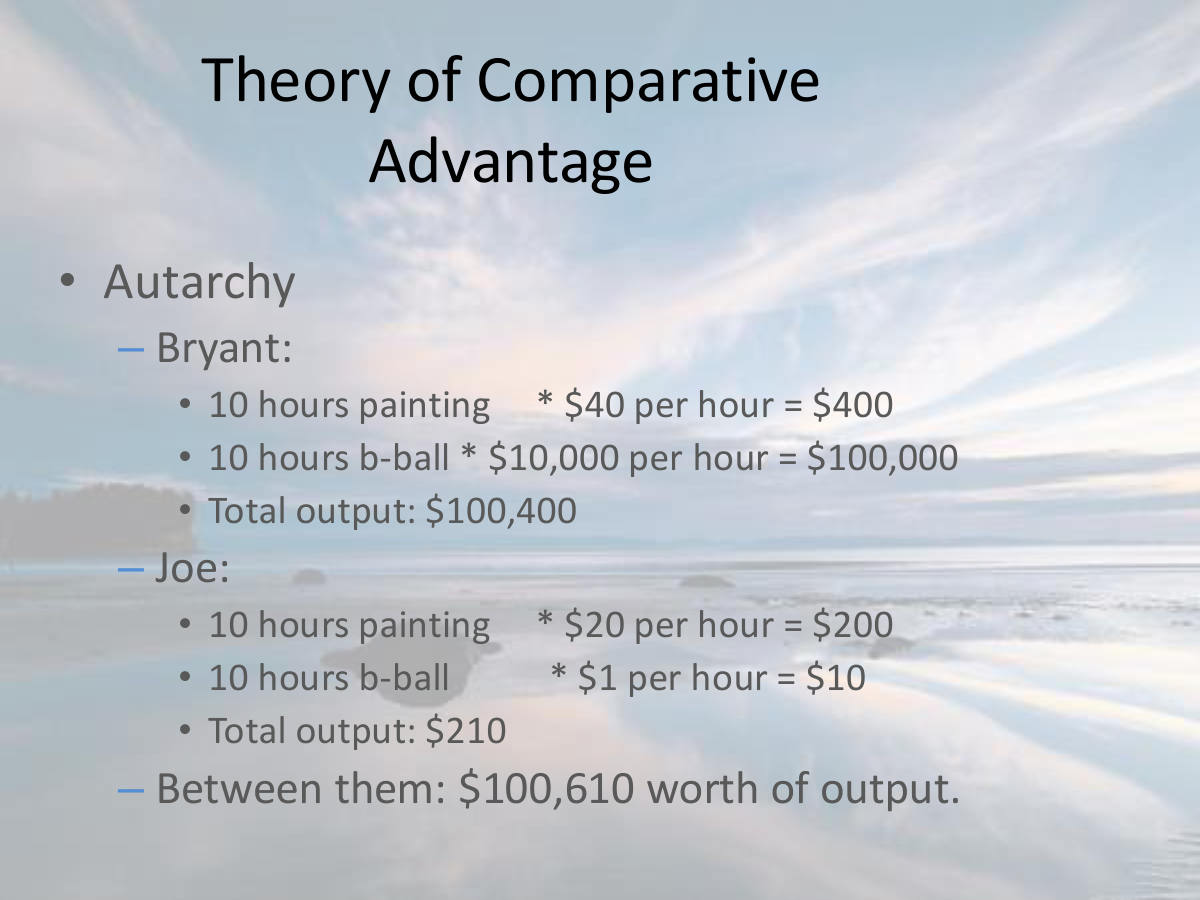
Theory of Comparative Advantage. Autarchy. Bryant: 10 hours painting * $40 per hour = $400. 10 hours b-ball * $10,000 per hour = $100,000. Total output: $100,400. Joe: 10 hours painting * $20 per hour = $200. 10 hours b-ball * $1 per hour = $10. Total output: $210. Between them: $100,610 worth of output.
34
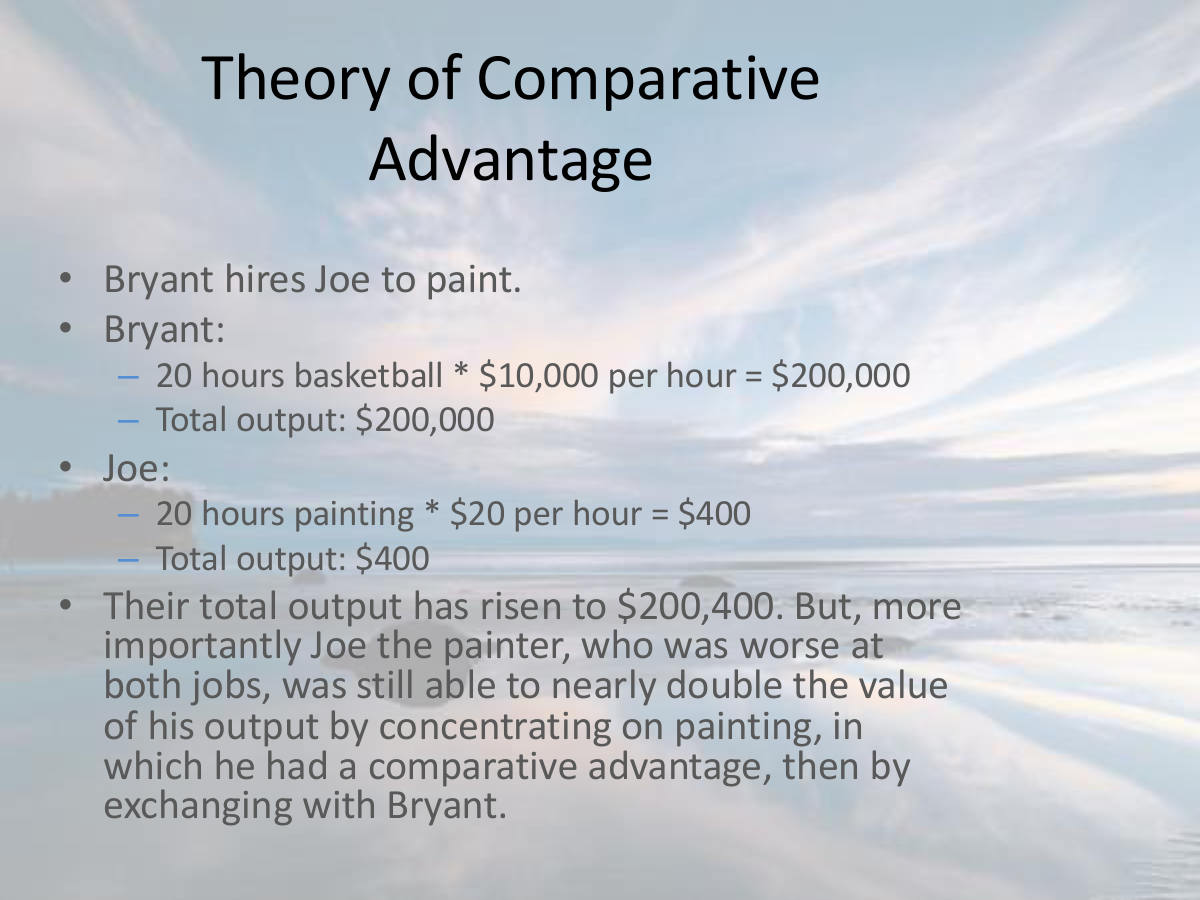
Theory of Comparative Advantage. Bryant hires Joe to paint. Bryant: 20 hours basketball * $10,000 per hour = $200,000. Total output: $200,000. Joe: 20 hours painting * $20 per hour = $400. Total output: $400. Their total output has risen to $200,400. But, more importantly Joe the painter, who was worse at both jobs, was still able to nearly double the value of his output by concentrating on painting, in which he had a comparative advantage, then by exchanging with Bryant.
35