← The Great Transformation

Economic Life Before the Great Transformation

Download PDF · 16 slides

Economic Life Before the Great Transformation
1
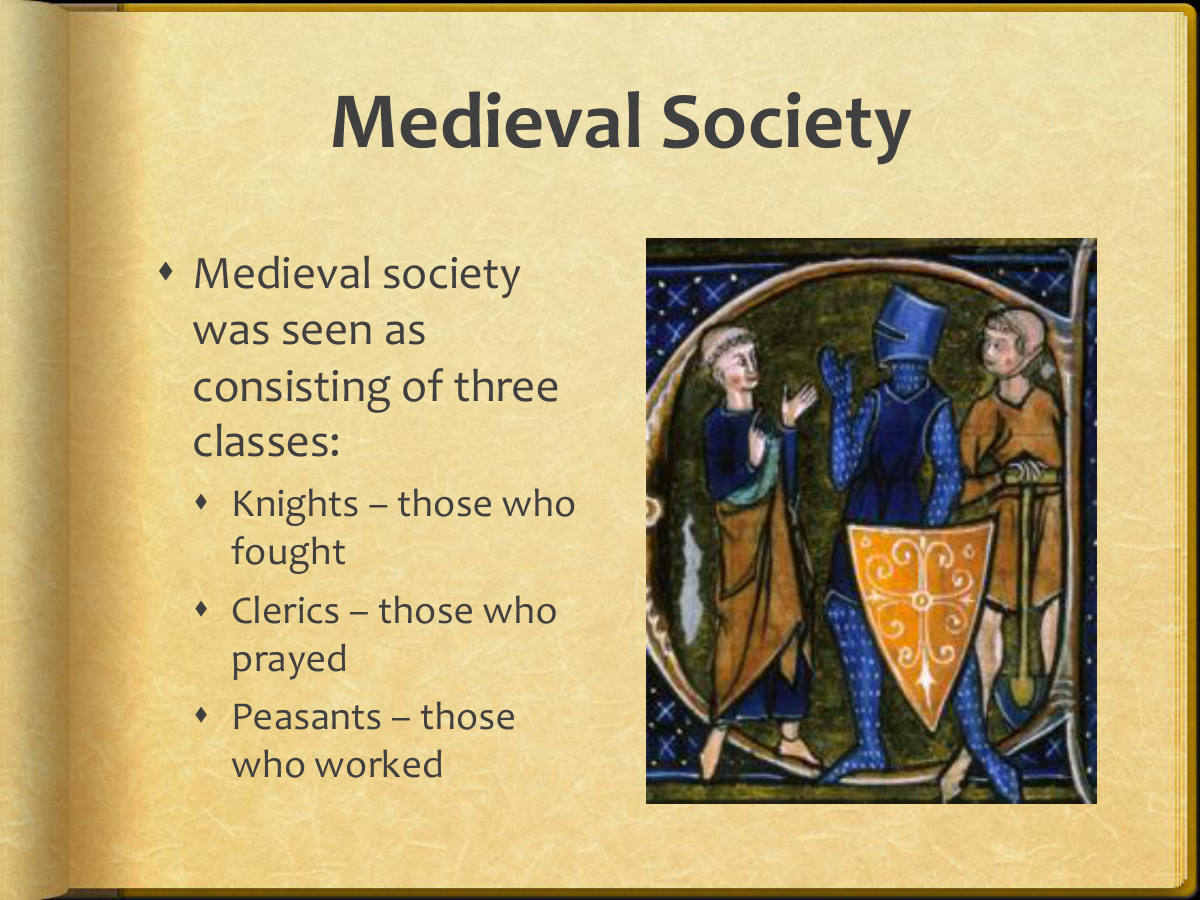
Medieval Society. Medieval society was seen as consisting of three classes: Knights – those who fought. Clerics – those who prayed. Peasants – those who worked
2
The Feudal System
3
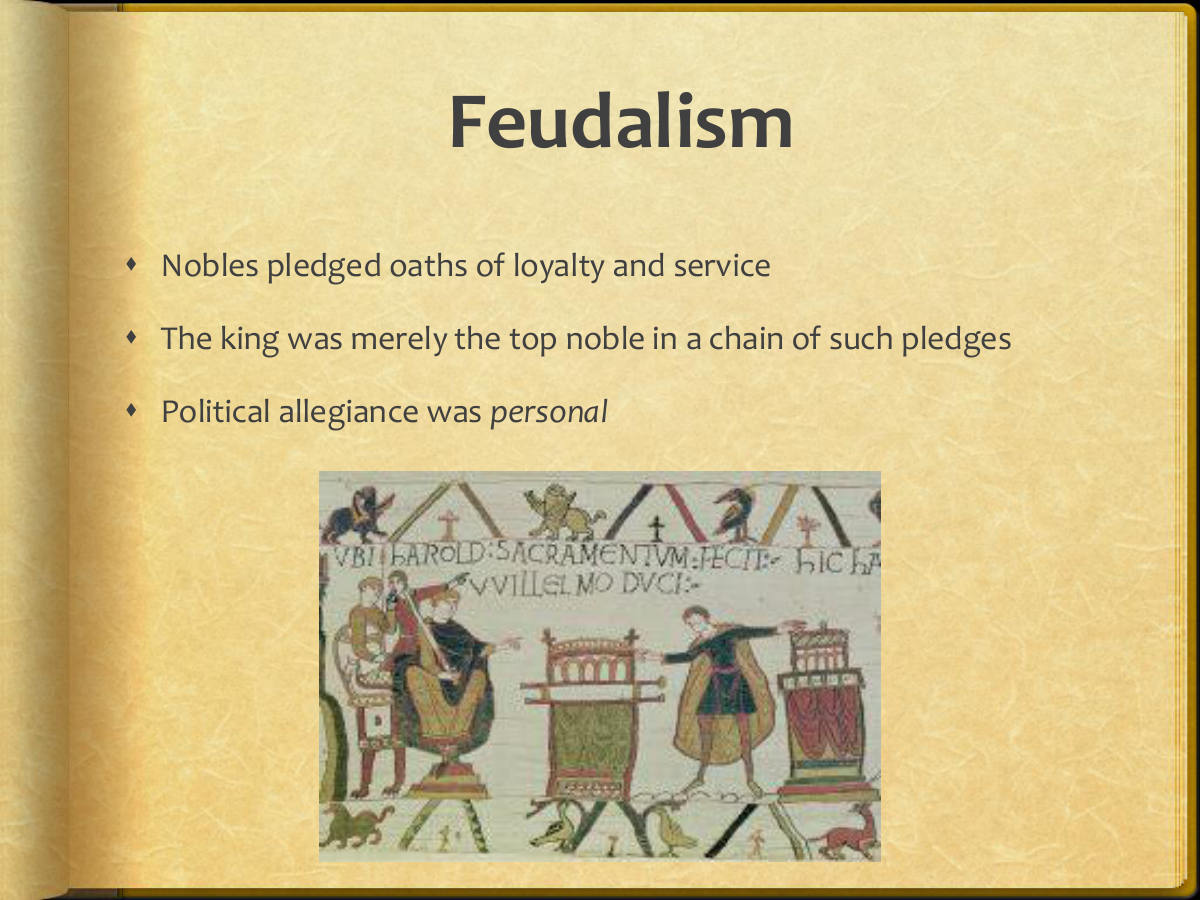
Feudalism. Nobles pledged oaths of loyalty and service. The king was merely the top noble in a chain of such pledges. Political allegiance was personal
4
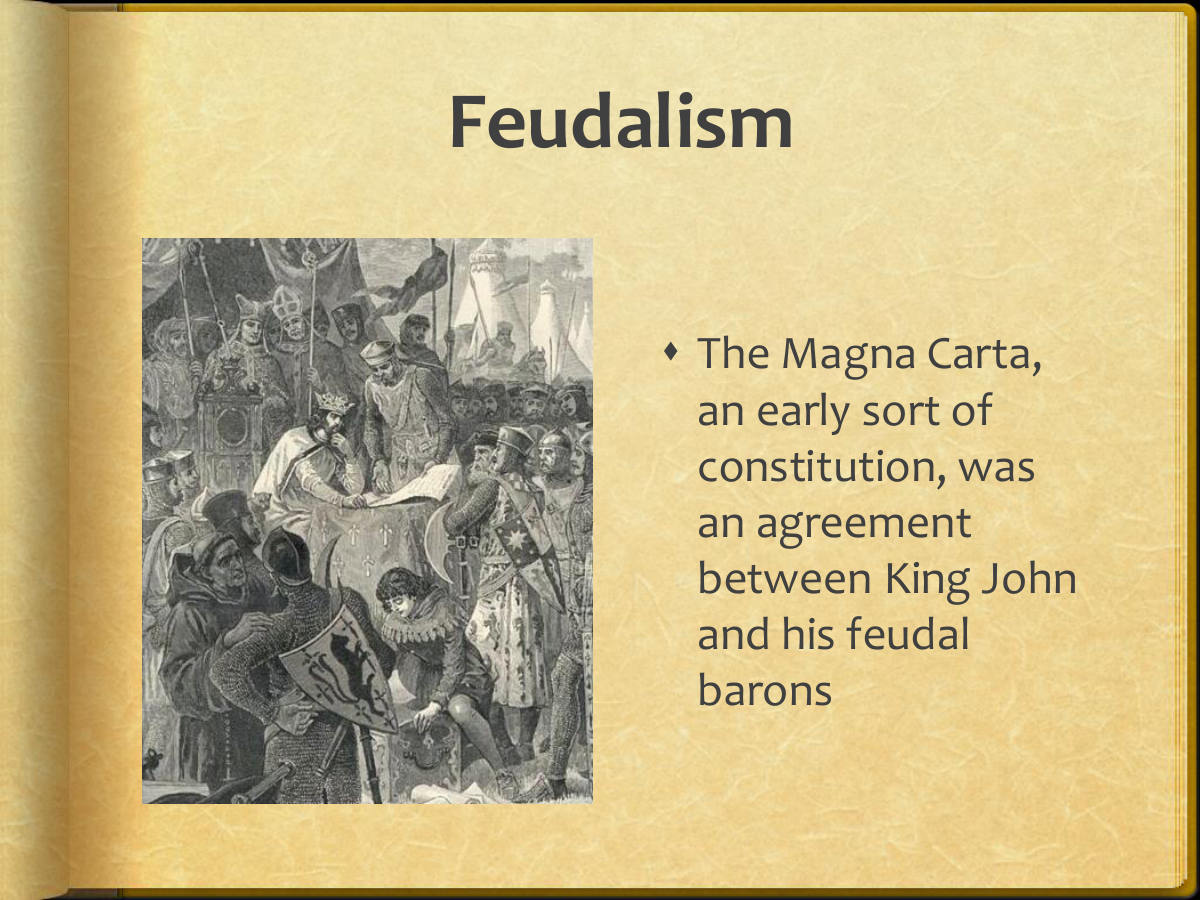
Feudalism. The Magna Carta, an early sort of constitution, was an agreement between King John and his feudal barons
5
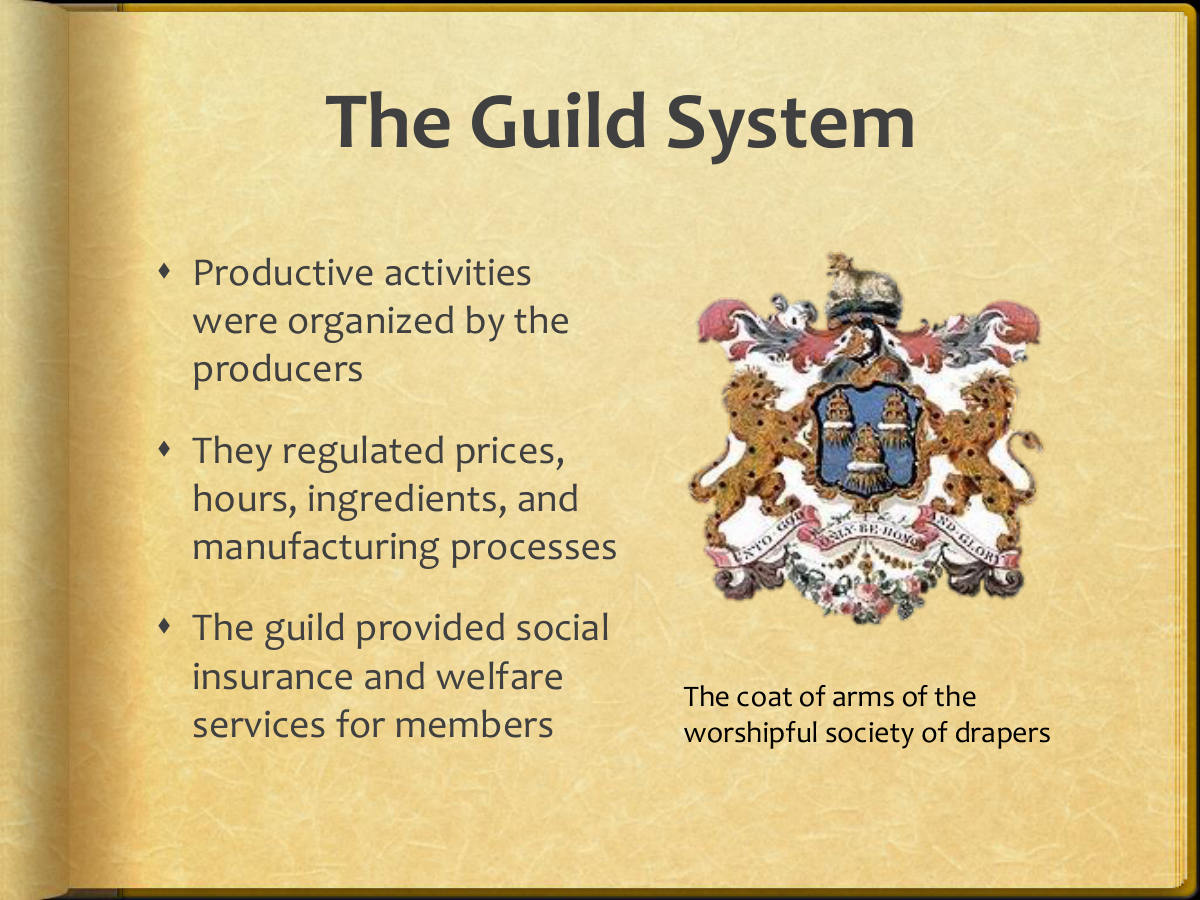
The Guild System. Productive activities were organized by the producers. They regulated prices, hours, ingredients, and manufacturing processes. The guild provided social insurance and welfare services for members. The coat of arms of the worshipful society of drapers
6
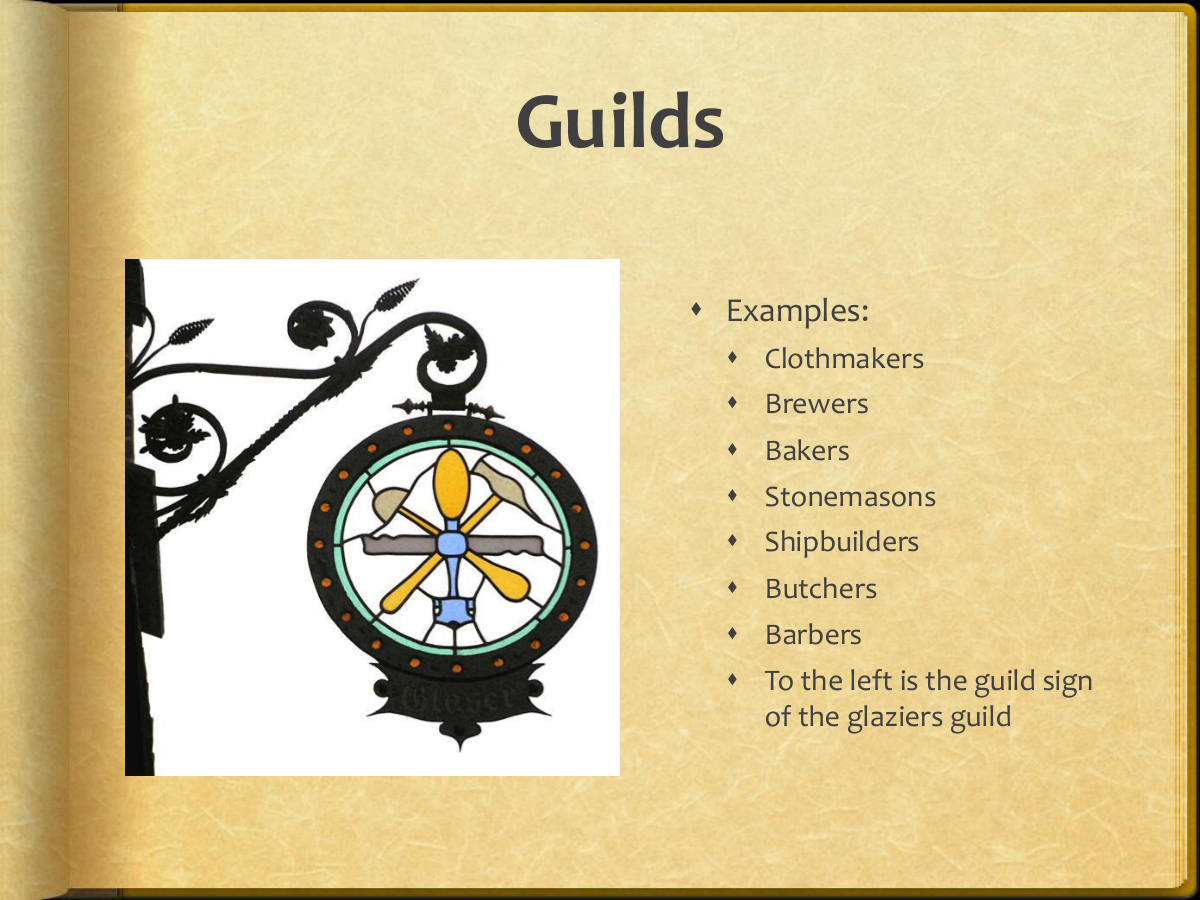
Guilds. Examples: Clothmakers. Brewers. Bakers. Stonemasons. Shipbuilders. Butchers. Barbers. To the left is the guild sign of the glaziers guild
7
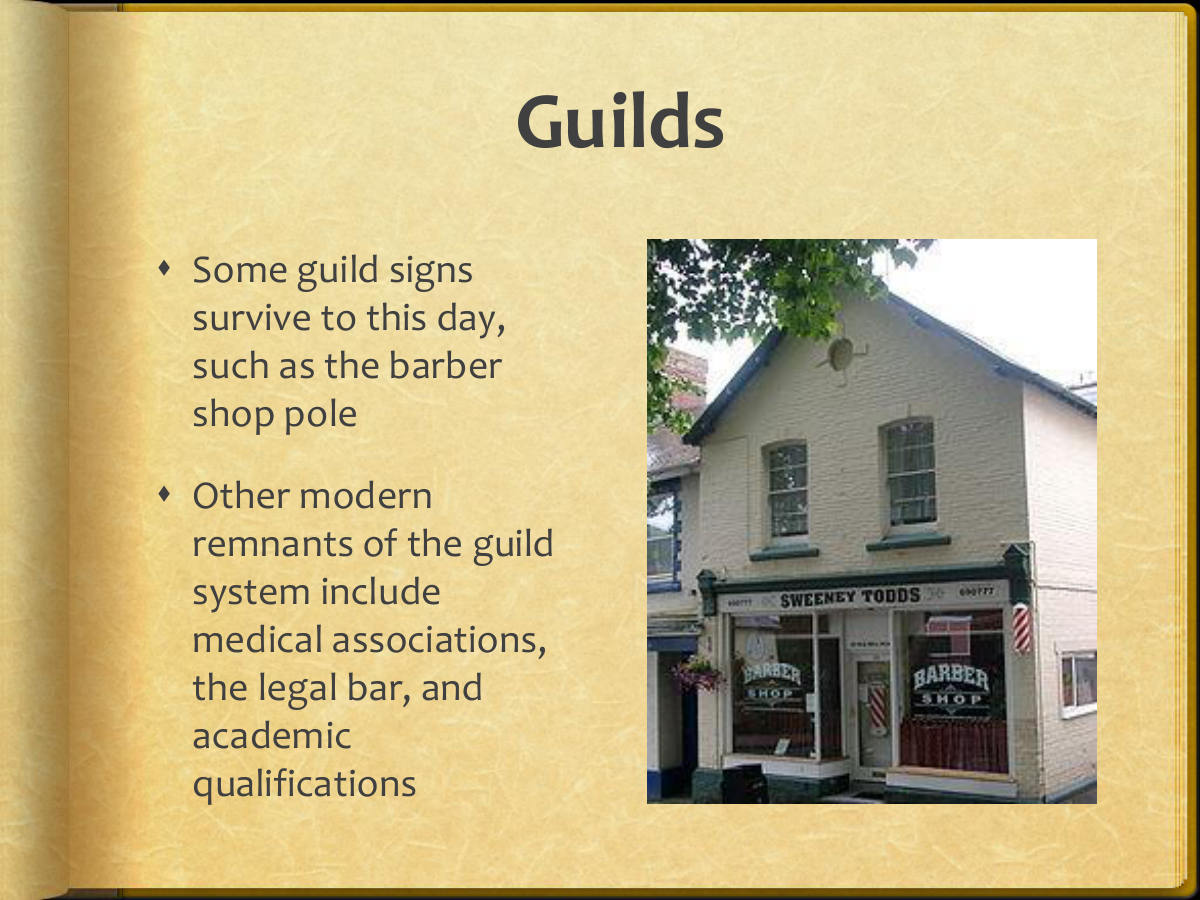
Guilds. Some guild signs survive to this day, such as the barber shop pole. Other modern remnants of the guild system include medical associations, the legal bar, and academic qualifications
8
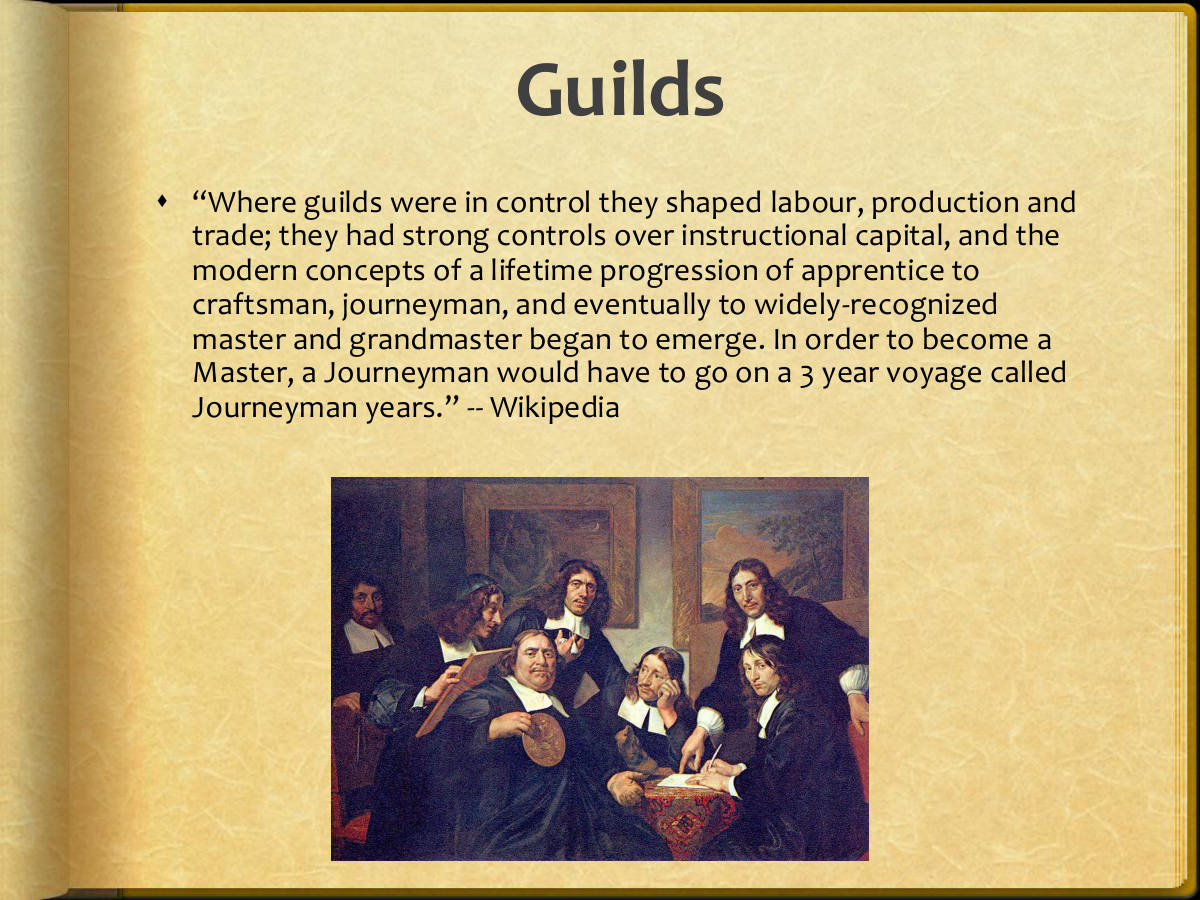
Guilds. “Where guilds were in control they shaped labour, production and trade; they had strong controls over instructional capital, and the modern concepts of a lifetime progression of apprentice to craftsman, journeyman, and eventually to widely-recognized master and grandmaster began to emerge. In order to become a Master, a Journeyman would have to go on a 3 year voyage called Journeyman years.” -- Wikipedia
9
The Manorial System. “Manorialism was characterised by the vesting of legal and economic power in a lord, supported economically from his own direct landholding and from the obligatory contributions of a legally subject part of the peasant population under his jurisdiction. These obligations could be payable in several ways, in labor… in kind, or, on rare occasions, in coin.” -- Wikipedia
10
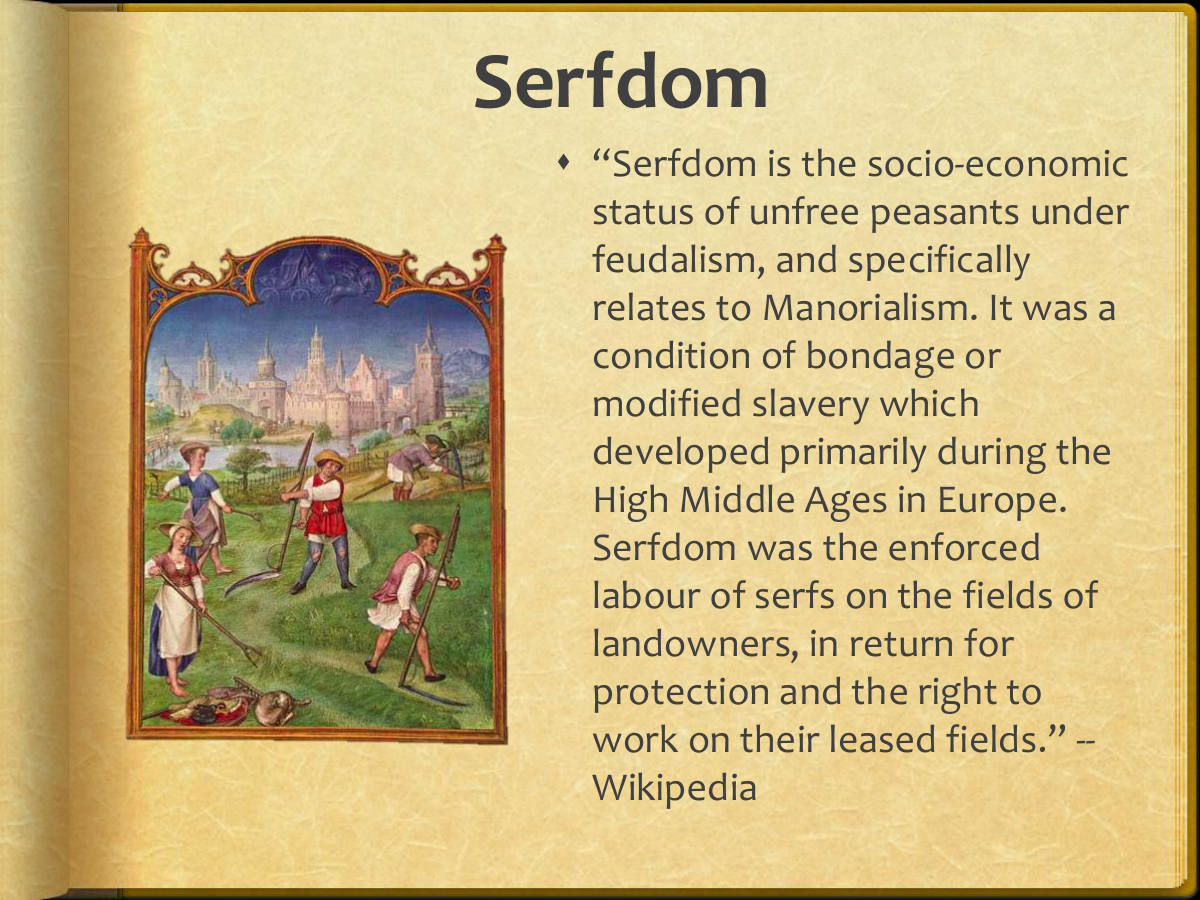
Serfdom. “Serfdom is the socio-economic status of unfree peasants under feudalism, and specifically relates to Manorialism. It was a condition of bondage or modified slavery which developed primarily during the High Middle Ages in Europe. Serfdom was the enforced labour of serfs on the fields of landowners, in return for protection and the right to work on their leased fields.” -- Wikipedia
11
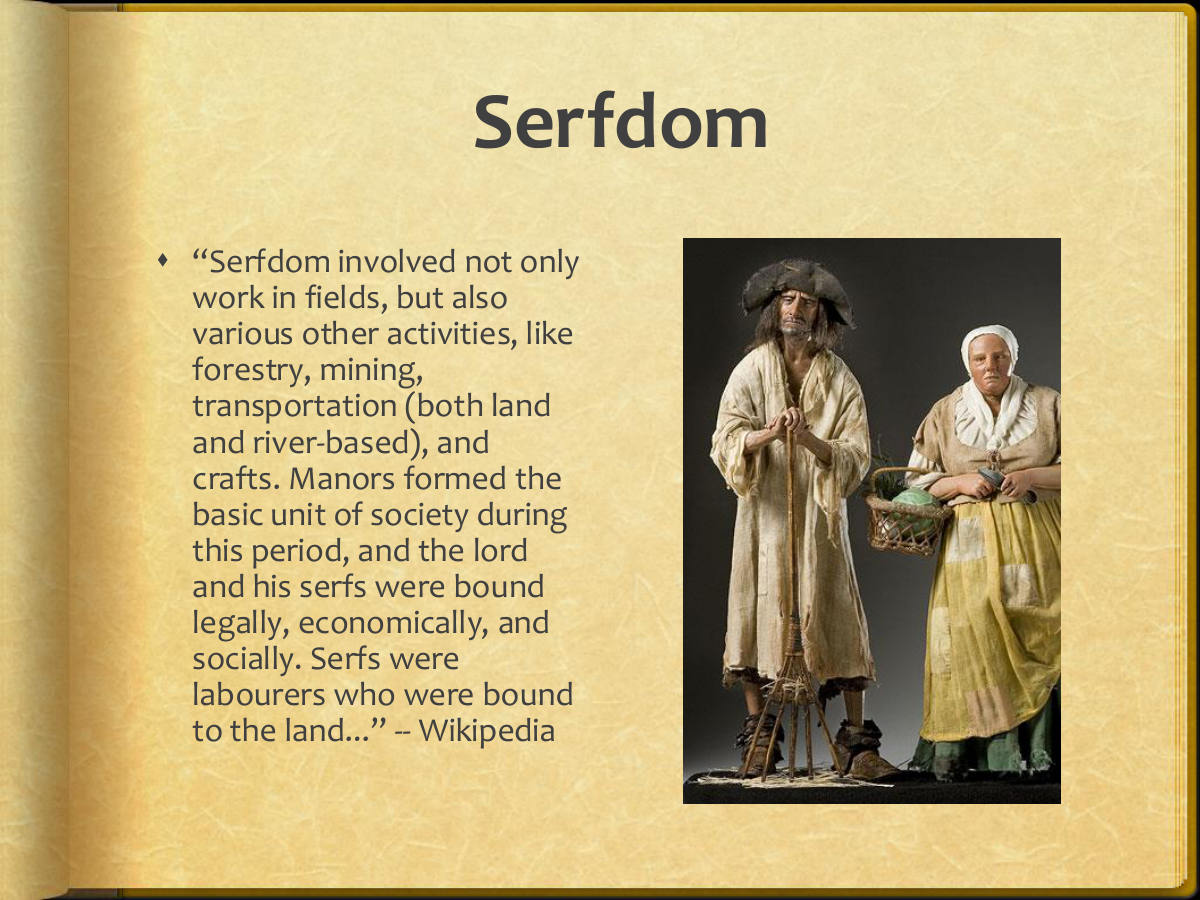
Serfdom. “Serfdom involved not only work in fields, but also various other activities, like forestry, mining, transportation (both land and river-based), and crafts. Manors formed the basic unit of society during this period, and the lord and his serfs were bound legally, economically, and socially. Serfs were labourers who were bound to the land...” -- Wikipedia
12
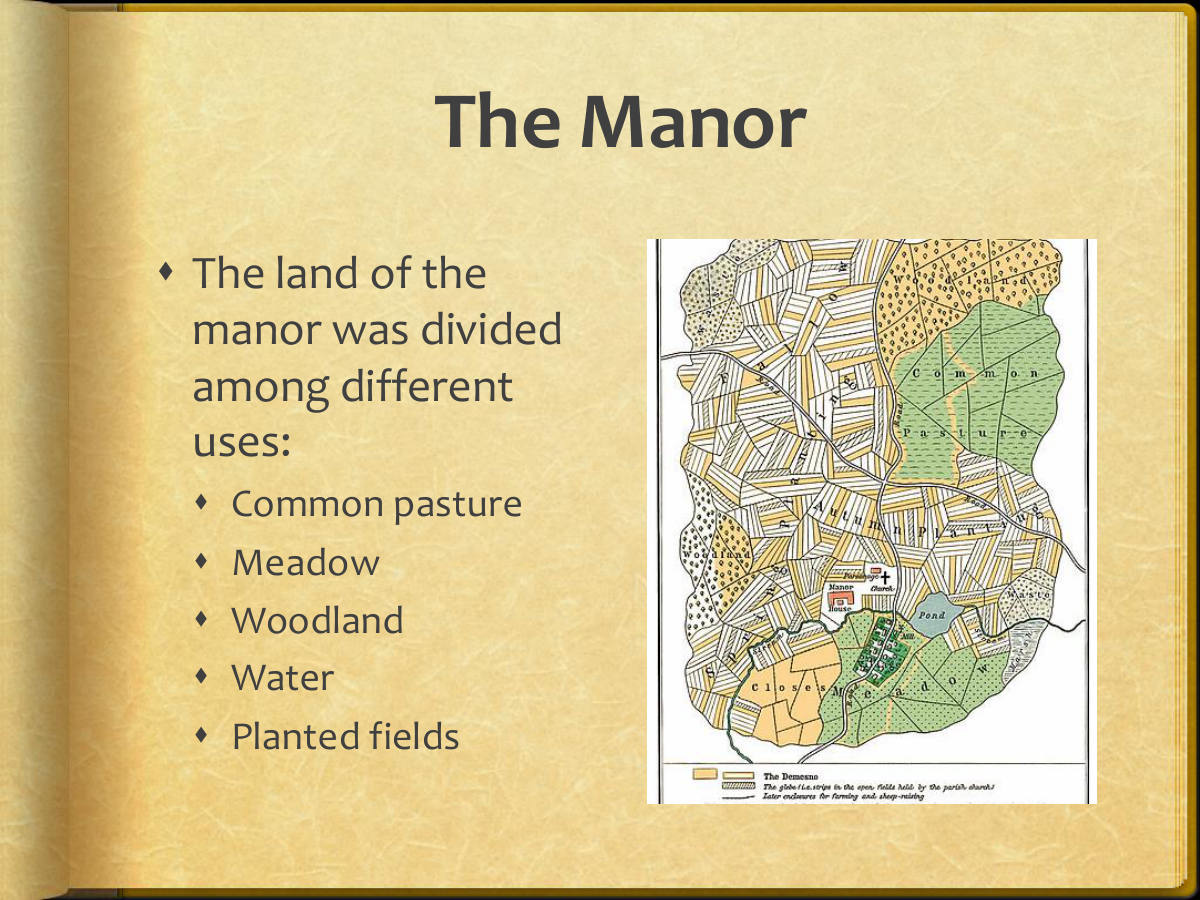
The Manor. The land of the manor was divided among different uses: Common pasture. Meadow. Woodland. Water. Planted fields
13
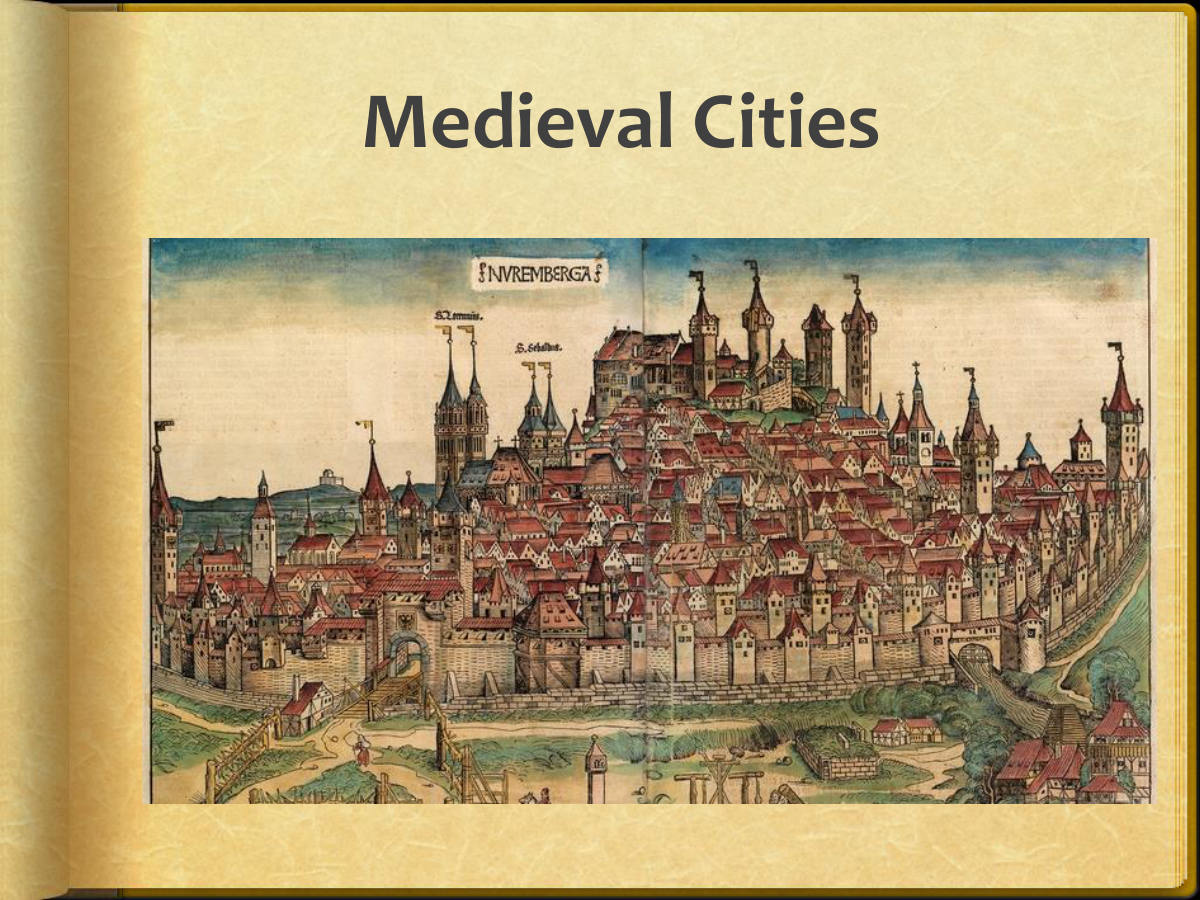
Medieval Cities
14
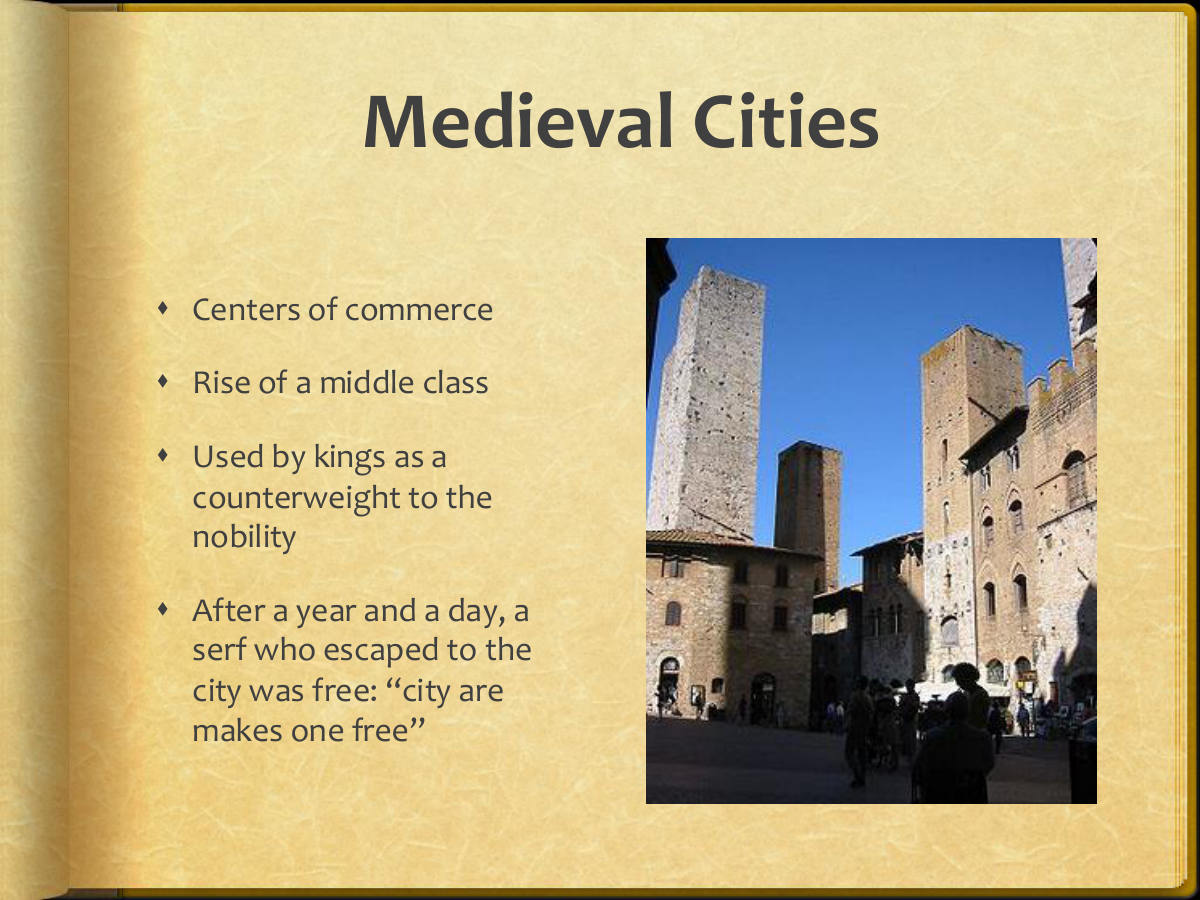
Medieval Cities. Centers of commerce. Rise of a middle class. Used by kings as a counterweight to the nobility. After a year and a day, a serf who escaped to the city was free: “city are makes one free”
15
Rise of a Merchant Class in the High Middle Ages. Merchants were a strange class -- always wandering, most often they had non-free parents. Merchants were outside the manorial system, circulating everywhere without being claimed by anyone. Merchants required new, simpler legal code than the one that was suitable to manorial life. City life depends on commerce- visa-versa. Cities and specialization division of labor. Merchants need a fixed place for slow times and to trade information and banking.
16