Justice in Ancient Greece
“If you know your history
Then you would know where you coming from” – Bob Marley
“If you don’t know your past
You don’t know your future” – Ziggy Marley
Why should we bother exploring what some people, who lived in a land an ocean away from us, and millennia before our time, thought about an idea like justice?
One answer is, “Because the past lives on in us today.” Is that the best answer? I don’t know. But I do think it is an answer sufficient to justify our interest, if, for some reason, we do not find sheer fascination with the story of those people to be enough on its own.
In our case, we are going to examine transformations in the concept of justice that occurred over several centuries on the peninsula of Greece, roughly between 800 B.C. and 350 B.C. This transformation is organically tied to the growth of what we might call “Greek civilization.” So perhaps we should pause here and ask what we mean by a “civilization.”
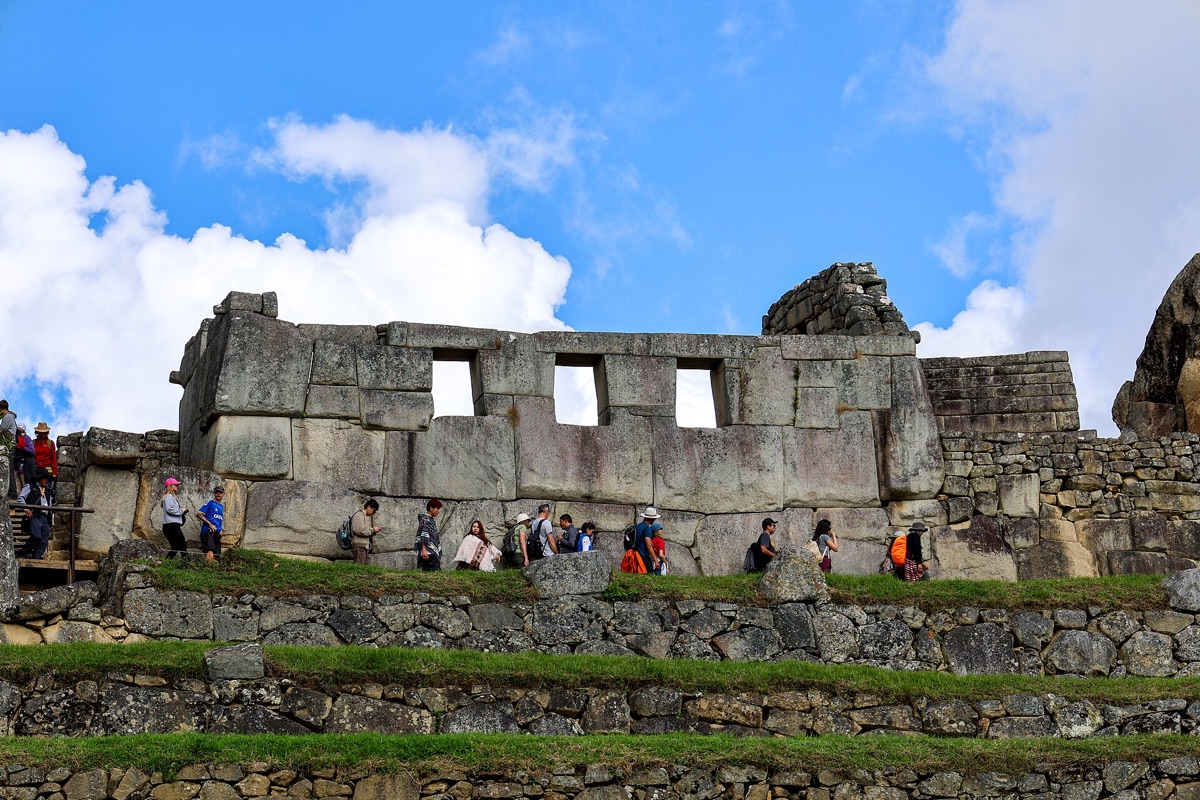
One way to define “civilization” is as an ideal type, describing a society organized in a significantly more complex arrangement than the tribe or clan, such that it produces large-scale evidence of that complexity. (There are certainly other existing as well as possible definitions of the term civilization. We will employ the definition above because we find it aids our theorizing.) Those productions which we take to be the distinctive marks of a civilization may include monumental architecture, enduring artworks such as statuary, elaborate craftwork, coinage, large-scale agriculture, writing, bureaucracy, formalized law systems, and more.
This definition makes no claim that “civilized” people are somehow better or more valuable than “savage” people. It makes no claim that a society we recognize as civilized is necessarily better than one organized around the tribe or clan. (Perhaps being civilized is a true advance over pre-civilized living, or perhaps it actually binds us in chains, as Rousseau suggested. Here, we merely bracket that question, as something we might consider on another day.) We will use “civilized” simply to signify a notable difference in social arrangements, a difference worthy of exploration.
In any case, whether for better or for worse, the rise of a civilization in some part of the human world, at some point in time, represents the efflorescence of a noteworthy level of societal complexity. Thus, I contend, it is both appropriate and useful for us, living in an almost “hyper-civilized” society, to study these episodes with particular attention, in the interest of seeing how we arrived at where we are.
(And here I will note that while the true historical spirit is moved chiefly by the simple delight of determining what were the “goings-on” that occurred at some time in the past, examining the patterns we might come to recognize in those goings-on as aids to understanding our current situation is also a worthy undertaking.)
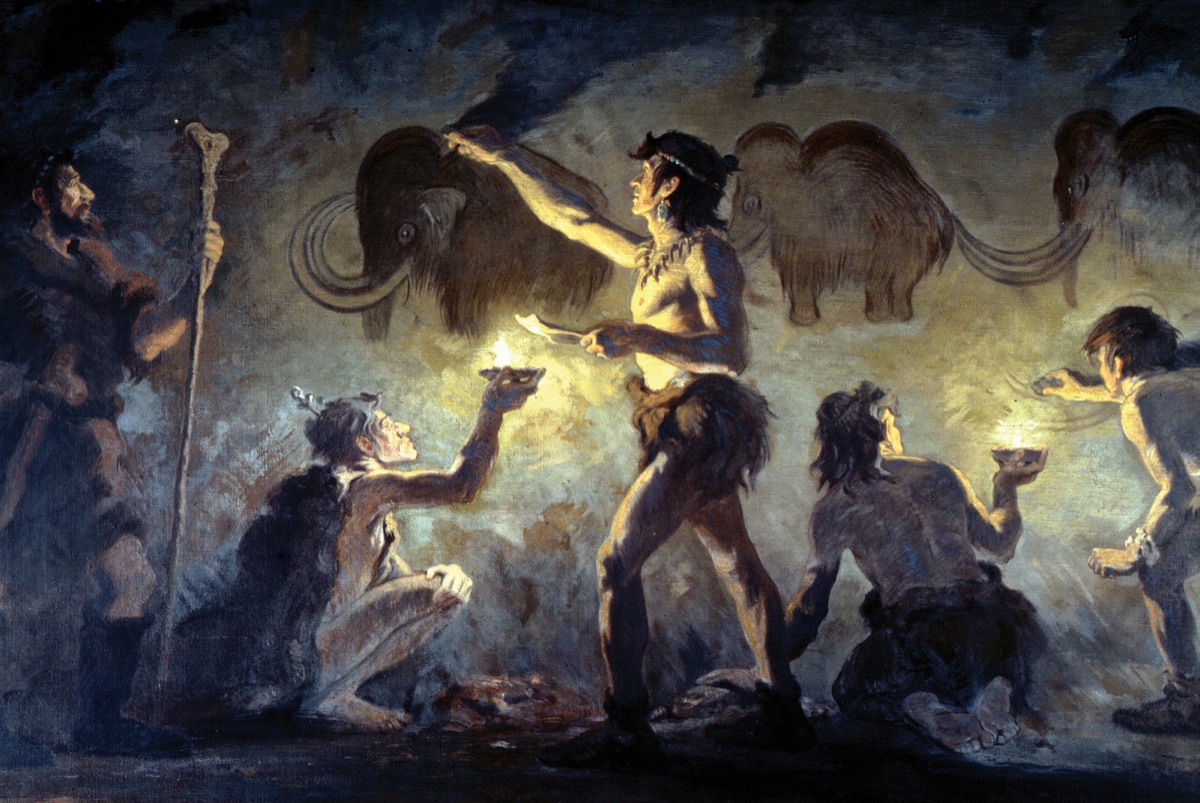
In a traditional society, although notable events may periodically occur, such as an episode when the chief was gored by an angry boar, there are no social transformations that introduce significant discontinuities within those people’s social life. That is because, per the ideal type we will employ of a “traditional society,” if there were, that society would cease to be strictly traditional, and would begin to take on, at least to some extent, that condition which we call “modernity.”
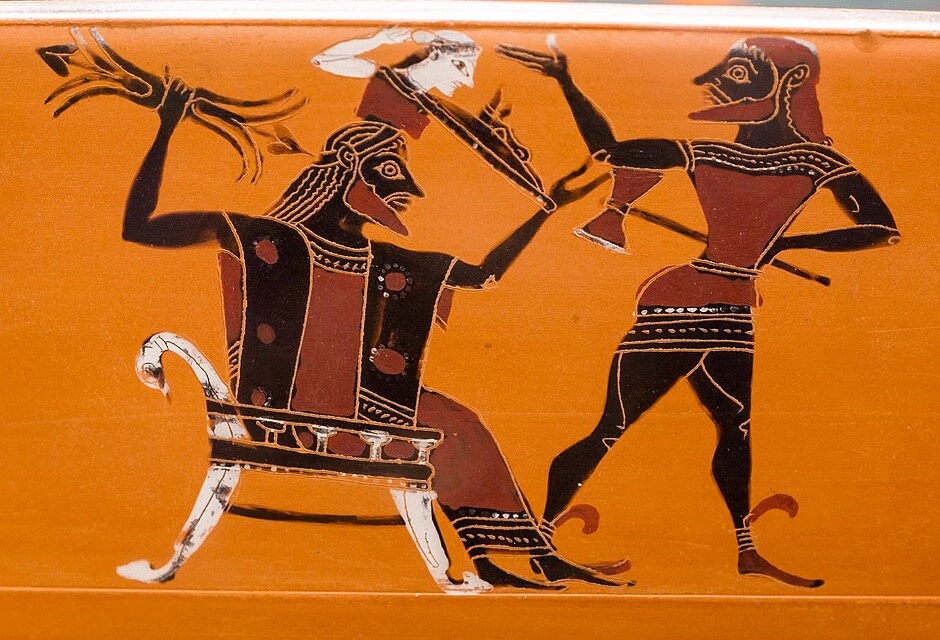
Now I take the condition of modernity itself to be a matter of degree, in that the changes that occur as a society becomes “more modern” can still be explained historically: we are not forced to regard them as akin to a phase change, such as when liquid water suddenly becomes frozen. In this understanding, what we might call the “modern era,” which we could date, depending on our theoretical predilections, as beginning somewhere between the 1400s and the 1600s, is not one in which the condition of modernity emerges, fully developed, like Athena from the head of Zeus, without any gestation period beyond a brief, splitting headache.
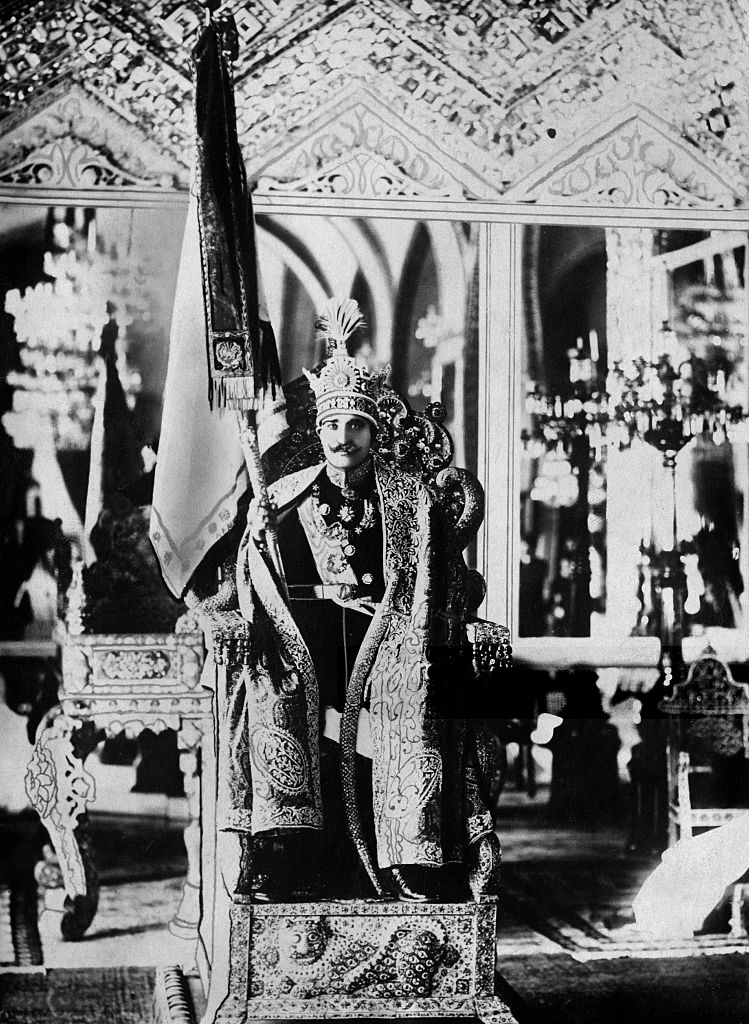
Rather, the modern age is a period in which the intensification of that condition has proceeded to an extent that some of those experiencing it begin to posit “becoming more modern” not merely as a problematic process seeking explanation, but as a virtuous activity, which thus ought to be deliberately pursued. To the extent that such voices have gained influence in a society, that society itself has begun to pursue a process of “modernization.” We can see such a process pursued quite explicitly in, for example, Kemal Ataturk’s modernization program for Turkey, Reza Shah’s similar undertaking in Persia (which included changing the country’s name to Iran), or Mao’s even more “vigorous” efforts in China. (In both Turkey and Iran, persuading the population to modernize employed fair amounts of violence, but Mao’s thuggery made Ataturk’s and Reza Shah’s brutality appear but as a soft nudge.)
Modernity is problematic for the people who experience it, in a way that the activities of a traditional society are not for its members. Since those entering into this condition have cast off the way of their ancestors, and are aware that they have done so, on what basis do they justify how they are now behaving? Why is that way better than any other way they might conduct their lives? More specifically, why is their new way of doing things to be preferred to the traditional way that they have abandoned?
Of course, traditional societies themselves are not fixed in amber, like the fossil of some ancient insect. They change, for instance, by adopting a new way of making spearheads, discovering a new source of food, or crossing some mountains and moving into a new valley. But those changes are not so disruptive that they prompt the people undergoing them to ask, “Why are we now living in this way, rather than in some alternative fashion, one of which we possess some significant awareness?”
And once again, it is worth pointing out that this distinction follows from the ideal types we are using. We are not attempting to identify an historical fact, asserting that we have examined all “traditional” societies, and found that none of them asked such a question. That effort would itself assume some prior characterization of what is meant by a “traditional society.” In terms of the ideal types we are employing, any society that began to ask such questions would be less and less characterized by the ideal type “traditional society,” and more and more conformant to the ideal type “modern society.”
The first symptoms of modernity can be recognized when some people begin to formulate myths that act as explanations, not merely for their existence in the cosmos, but for their existence as a different form of society from those around them. We can see this type of explanation arising, for instance, in Egyptian mythology that explains the preeminence of the pharaoh, or in the Old Testament, where the Hebrews offer explanations as to how they were different from the people around them, or in Greek myths that told of how the more conceptually characterized Olympian gods overthrew the more elemental gods that had preceded them.

And that brings us back to ancient Greece. In the progress of that society, in the three texts we will read – the Iliad, Antigone, and the Nicomachean Ethics – we see attempts to grapple with the question of how one should live justly. The later attempts do not deny the earlier concepts of justice; rather, they build upon them.
Here, it is worth pointing out that there is no attempt to “pitch” any of these views to you, as if we could solve many of America’s social problems by simply becoming Homeric heroes or fifth-century Athenians.
But what is possible, through studying these texts, is coming to understand that different conceptions of justice, each of them reasonable in its own way, can and do co-exist. And I hope that you will see that these conceptions have their echoes in the world around us today.