By the Sweat of Your Brow Edited by Gene Callahan

An edited volume in the history of ideas

By the Sweat of Your Brow

The Concept of Work in the History of European Philosophy

Is work a curse or a calling, the enemy of leisure or a basic human good? Twenty-one scholars trace how the Western tradition has understood work, from Plato, Aristotle and the New Testament through Aquinas, Luther, Locke, Smith, Hegel and Marx to Weber, Arendt, Pieper, Oakeshott and MacIntyre.

By the sweat of your brow you will eat your food until you return to the ground.Genesis 3:19
Purchase the book Table of contents ↓

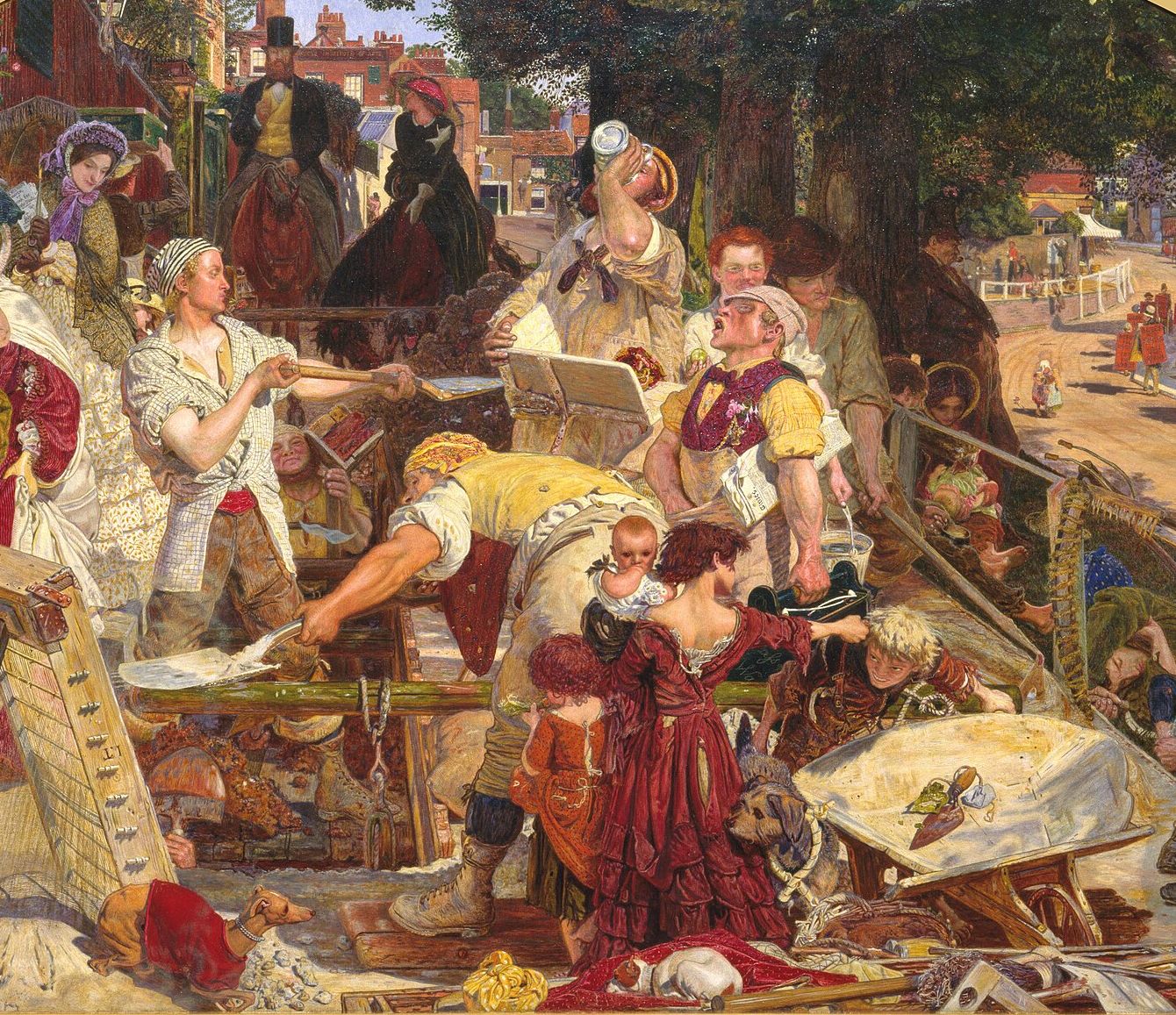
Ford Madox Brown's painting Work: navvies digging up a Hampstead
street in the sun while gentlemen, a flower-seller and ragged children look
on

The Editor

Gene Callahan Gene Callahan New York University

Contents

  1. 1
    Introduction
  2. 2
    Plato and Aristotle on Craft and Craftsmen
  3. 3
    Work in the New Testament
  4. 4
    Thomas Aquinas on Work
  5. 5
    The Spiritualization of Work: Luther and the Dual Vocation
  6. 6
    Creation, Fall, and (Technological) Redemption: Francis Bacon on Work and Man’s Right over Nature
  7. 7
    John Locke: Ownership from Labor
  8. 8
    Adam Smith and the Division of Labor
  9. 9
    Hegel on Labor
  10. 10
    Labor of Love: Kierkegaard on Vocation
  11. 11
    The Abolition of the Division of Labor in the Work of Karl Marx
  12. 12
    The Protestant Hypothesis and the Spirit of Weber
  13. 13
    Giovanni Gentile and the “Humanism of Labor”
  14. 14
    Mises: The Disutility of Labor
  15. 15
    The Woman’s Soul as “Shelter”: Edith Stein on the Work of Women
  16. 16
    Michael Oakeshott and the “Deadliness of Doing”
  17. 17
    Leisure and Work in Josef Pieper’s Philosophical Anthropology
  18. 18
    Hannah Arendt on the Triumph of Homo Faber and the Fragility of Human Action
  19. 19
    MacIntyre on Work as a Practice
  20. 20
    Some Contemporary Issues in the Philosophy of Work
  21. 21
    The New Natural Law Theory and the Basic Human Good of Work

Click on a chapter title to read its abstract, or a contributor's name to read their biography.